Leave A Message
If you are interested in our products and want to know more details,please leave a message here,we will reply you as soon as we can.


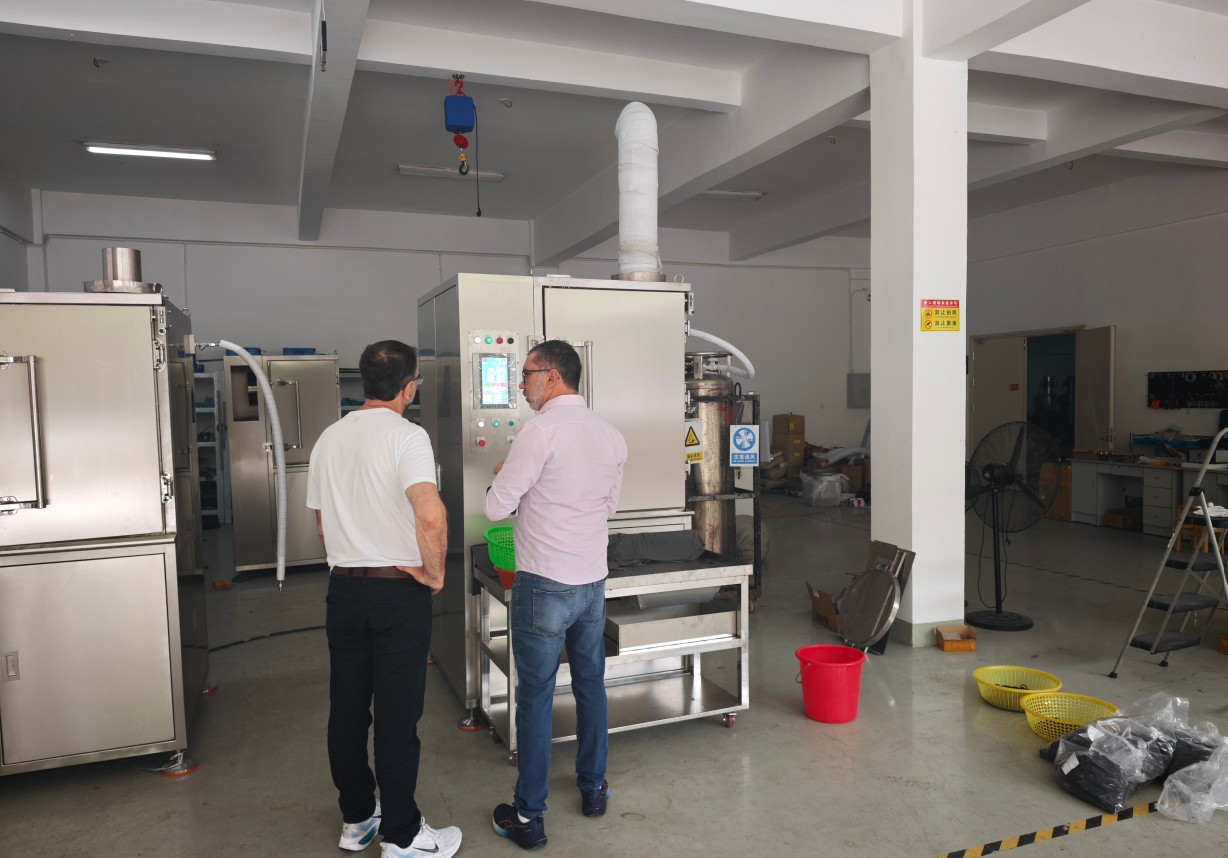
Brazilian Customer Visits PEGE Factory: Successful O-Ring Cryogenic Deflashing Trial on PG-120T NANJING, China — September 21, 2026 — A delegation from a Brazilian rubber products manufacturer visited NANJING PEGE TECHNO MACHINE CO., LTD this week for an on-site cryogenic deflashing trial of its O-ring products. The customer brought its O-rings to PEGE's testing workshop, where the parts were processed on the company's 120-liter Frozen Shot PG-120T cryogenic deflashing machine. The trial was run at a batch load of 7 kg, a processing temperature of -70 °C, an 8-minute cycle time, a throwing wheel speed of 6,500 rpm with a basket speed of 20 rpm, using 1.0 mm deflashing media. The results were impressive: flash was removed cleanly and uniformly across the batch, with no damage to the sealing surfaces or dimensions of the O-rings. The customer reviewed the finished parts directly after the trial and expressed strong satisfaction with both the deflashing quality and the machine's throughput. Following the successful test, the delegation showed strong interest in the PG-120T, PEGE's mid-to-large-capacity cryogenic deflashing model widely used for seals, O-rings and other molded rubber parts. The customer said it would discuss the purchase timing with its board of directors after returning to Brazil. PEGE supports prospective buyers worldwide with free sample testing at its Nanjing facility, allowing customers to verify process parameters and deflashing results on their own parts before making an equipment decision. About NANJING PEGE TECHNO MACHINE CO., LTD PEGE is a China-based manufacturer of cryogenic deflashing machines and loss-in-weight feeders, with 15 years of experience in cryogenic deflashing technology. Its Frozen Shot PG-series machines are exported to more than 15 countries and serve the automotive, electronics, appliance and medical industries. Contact: • Website: www.pegedeflashing.com • Email: pan_cunsong@pegedeflashing.com • Tel / WhatsApp: +86 132 6071 3283
Read More
Cryogenic Deflashing vs Manual Deflashing: Cost, Efficiency & Quality Compared (2026) Meta Title: Cryogenic Deflashing vs Manual Deflashing: Cost & Efficiency | PEGE Meta Description: Cryogenic vs manual deflashing compared on labor cost, throughput, consistency and scrap. See verified data — a real plant that cut ~100 hand trimmers to 6, payback of 8–9 months, and a worked labor-cost model. Article overview: Should a rubber molder, plastics plant, or die-caster keep trimming flash by hand, or invest in a cryogenic deflashing machine? This guide compares the two methods directly — how each works, what each costs at low and high volumes, and how they differ in consistency, scrap, and labor. It includes a transparent labor-cost model built on official wage data (U.S. BLS and Eurostat), a side-by-side comparison table, the reason real-world payback runs around 8–9 months rather than the theoretical minimum, and verified customer installations — including a Chongqing automotive rubber plant supplying Changan Group that reduced roughly 100 hand trimmers to one machine plus 5–6 operators and, after ~12 years on another brand, switched to a PEGE PG-120T in 2025. It ends with a practical ROI framework and FAQ so procurement and operations teams can decide with their own numbers. Written from a manufacturer's perspective — NANJING PEGE TECHNO MACHINE CO., LTD, builder of the Frozen Shot PG-series. Quick Answer Manual deflashing — operators removing flash with knives, scissors, fixtures, or hand tools — needs almost no capital and is flexible, but its cost scales directly with headcount, quality varies between operators, and complex geometries are hard to reach. Cryogenic deflashing freezes the thin flash until brittle and removes it with high-speed polycarbonate media in a controlled, recipe-driven cycle; it needs capital expenditure plus liquid nitrogen, media, and power, but one operator can run a machine that processes 150–600 kg/day with uniform results and lower scrap. The two methods cross over as volume rises: at regular production volumes, the labor saved by a machine typically repays its cost in roughly 8–9 months, based on verified PEGE customer installations. At a high-volume automotive rubber plant in Chongqing (a Changan Group supplier), the same transition cut a trimming team from about 100 people to one machine plus 5–6 operators (around 94%); after running another brand for about twelve years, that company expanded in 2025 with a PEGE PG-120T, rating it higher for throughput, efficiency, and finish. Manual deflashing remains the rational choice for very low or irregular volumes, for parts with genuinely fragile edges, and for a few materials that do not embrittle cleanly. Key Takeaways • Manual deflashing is a labor-scaled cost: more parts require proportionally more workers. Cryogenic deflashing is a capital- plus operating-cost model whose per-part cost falls as utilization rises. • A cryogenic machine is run by one operator and delivers recipe-controlled, batch-to-batch consistency; hand trimming quality depends on the individual operator. • Liquid nitrogen, polycarbonate media, and power are real recurring costs — they are the difference between the theoretical "labor-only" payback and the verified ~8–9 month payback seen in real factories. • A documented automotive case shows the extreme of this effect: roughly 100 hand trimmers replaced by one machine plus 5–6 people at an output of about 35 million parts/year. • Cryogenic deflashing does not eliminate every second of hand work: inspection, sorting, and occasional touch-up on difficult parts usually remain. • Manual deflashing is still the better fit below roughly 50–100 kg/day or for irregular demand; a deflashing service job-shop is the middle option between the two. What Is Manual Deflashing? Manual (hand) deflashing means operators remove the excess material left at parting lines, gates, and vents using hand tools — trimming knives, scissors, blades, fixtures, or sometimes a rotating fixture against a fixed blade. It requires almost no investment beyond tools and a bench, it can be started immediately, and a skilled operator can adapt to almost any part shape. Its limitations are structural: • Cost rises linearly with volume. Every additional kilogram of parts needs additional operator-hours; there is no economy of scale. • Results vary. Finish quality depends on operator skill, fatigue, and turnover, so two batches — or two parts in the same batch — can look different. • Damage risk. On elastic rubber and soft plastics, a blade can pull, stretch, nick, or tear the part body instead of just the flash, creating scrap and re-inspection. • Geometry limits. Undercuts, blind holes, thin webs, and intricate parting lines are slow or impossible to reach by hand. • Labor market risk. In many regions it is increasingly difficult to hire and retain workers for repetitive trimming work. Manual deflashing is most often found in small shops, in low-volume / high-mix production, and as a secondary touch-up step after an automated process. What Is Cryogenic Deflashing? Cryogenic deflashing uses liquid nitrogen to cool parts until the thin flash becomes brittle while the thicker part body still retains its toughness. A high-speed wheel then projects polycarbonate media at the tumbling parts, breaking away the brittle flash without cutting tools touching the part. Temperature, cycle time, media size, blast speed, and barrel speed are stored as recipes, so the same part runs identically every time. For a full explanation of the cooling and blasting sequence, see our article How Does a Cryogenic Deflashing Machine Work? The process is suited to most molding rubbers, filled engineering plastics (such as PA+GF, PC+GF, POM, PPS, PEEK, and thermoplastic elastomers), and zinc/magnesium die-castings — but not to every material. For the complete material list, see our materials guide. Cryogenic Deflashing vs Manual Deflashing: Side-by-Side Factor Cryogenic Deflashing Manual Deflashing Upfront investment Machine purchase + installation (a compact machine starts around US$25,000) Minimal (hand tools, benches) Main ongoing cost Liquid nitrogen, polycarbonate media, power, 1 operator Direct labor — scales with volume Labor per shift 1 operator loads/runs/unloads Multiple trimmers (often dozens at volume) Consistency Recipe-controlled, identical every batch Operator-dependent, variable Surface / sealing damage None when parameters are correct — only flash is removed Risk of nicks, tears, and stretch Complex geometries 360° media reaches undercuts, holes, fine parting lines Limited access; slow on intricate parts Throughput 150–600 kg/day depending on model Slow; bounded by headcount Scrap rate Minimal Higher; rises with fatigue and turnover Best fit Regular, medium-to-high volume; quality-critical parts Low/irregular volume; fragile or unsuitable parts Why the Two Methods Scale Differently The core economic difference is how cost behaves as volume grows. • Manual deflashing is a variable, labor-scaled cost. If output doubles, trimming labor roughly doubles. There is no leverage: higher volume never makes each part cheaper to trim. • Cryogenic deflashing is a fixed-plus-operating-cost model. The machine purchase is fixed; liquid nitrogen, media, and power rise with output, but labor does not — one operator supervises the machine regardless of whether it is half or fully loaded. As utilization rises, the fixed machine cost is spread over more parts, so the cost per part falls. This is why the comparison usually favors hand work at very low volumes and machine work at regular production volumes — and why the decision should be made on your daily output and local labor rate rather than on the machine price alone. For the machine price tiers by capacity, see our price guide. Manual Deflashing Labor Cost: Worked Figures Liquid nitrogen and media are the costs people focus on, but the cost of hand trimming is labor — and the most useful number is the fully-loaded annual cost of one trimmer in your region. Using official wage figures (U.S. BLS Occupational Employment and Wage Statistics, 2025 median for hand laborers/material movers at US$19.35/hour; and Eurostat 2025 hourly labour cost for Hungary at €15.2/hour) over 8 hours × 250 working days: Region (source) Annual labor cost per manual trimmer United States (BLS, 2025) ~US$38,700 Hungary (Eurostat, 2025) ~€30,400 If a machine replaces manual trimmers and is run by one retained operator, the gross annual labor saving before any machine operating costs is: Trimmers replaced U.S. saving (BLS) Hungary saving (Eurostat) 10 ~US$348,300 ~€273,600 20 ~US$735,300 ~€577,600 40 ~US$1,509,300 ~€1,185,600 These are gross labor figures. They show why the incentive to automate is large — but they should not be read as spendable savings, because they do not yet subtract the costs below. Wage sources: U.S. Bureau of Labor Statistics, OEWS 2025; Eurostat hourly labour costs, 2025. Labour costs include employer social contributions where stated by Eurostat. Local wage levels and employer contributions vary; substitute your own payroll figures. Why Real-World Payback Is About 8–9 Months A calculation that divides a ~US$30,000 machine by the gross labor saving above would suggest a payback of well under a month. Real factories do not achieve that — and it is important to be honest about why: 1. Liquid nitrogen cost. LN₂ is delivered at different prices in every region and is consumed on every cycle. This is the largest operating cost of the process. 2. Polycarbonate media. Media is reusable for a few hundred cycles but is consumed and replaced over time. 3. Power and maintenance. Electrical load (4–9 kW depending on model) plus wear parts and routine maintenance. 4. Residual hand labor. Parts still need inspection and sorting, and a minority of difficult parts may need light touch-up. Plants rarely remove the entire theoretical trimming headcount on day one. 5. Landed cost and ramp-up. Shipping, import duties, installation, and an initial learning period add to the effective investment. Once these are included, the payback that real PEGE customers document is about 8–9 months. That verified figure — not the theoretical labor-only number — is the one to build a budget around. The general payback formula is: Payback (months) = (Machine landed price + installation) ÷ [(monthly labor cost of replaced workers) − (monthly LN₂ + media + power + maintenance + residual labor)] × 12 PEGE's optimized insulation and negative-pressure media circulation reduce LN₂ consumption by 15–20% versus comparable foreign-brand machines, which shortens the payback because LN₂ is the largest term in the denominator. Verified Installations: Real Payback Data These PEGE Frozen Shot installations replace hand trimming at different scales: Customer Country Model Daily output Payback period Skellerup New Zealand PG-60T 150 kg/day ~9 months Pagum Poland PG-120T 300 kg/day ~9 months Polytek USA PG-150T 500 kg/day ~8 months Notice that payback stays around the same range even as output and machine size grow: a larger machine costs more but also displaces more trimming labor. A high-volume automotive case: ~100 trimmers to one machine plus 5–6 people Consider a well-established automotive rubber parts manufacturer in Chongqing and long-term supplier to the Changan Automobile Group (name withheld at its request). It molds an EPDM sealing-hole cover at roughly 35 million pieces per year. After first piloting outsourced cryogenic processing and thinning its flash (from ~0.25 mm to within ~0.10 mm), the company brought a 120 L cryogenic deflashing machine (another brand) in-house in 2013. The result: • Trimming headcount fell from about 100 people to one machine plus 5–6 operators — roughly a 94% reduction (about RMB 3.99M / ≈US$0.56M gross labor saved per year at the customer's wage assumption). • Output rose from ~26M to ~35M pieces (+32–35%), with about 42 tonnes/year of EPDM saved and processing cost cut from RMB 8.62/kg to 3.35/kg. • Total annual savings and added value: about RMB 10.2 million (≈US$1.44M). In 2025, after roughly twelve years on the original brand, the company added capacity and switched to a PEGE Frozen Shot PG-120T. It reports a clear step up from its long-standing machine — higher throughput and capacity, higher efficiency, and better, more uniform deflashing results with less rework. (The full standalone case study, including the operating-cost breakdown, is published separately.) What this proves: at very high volumes the labor effect is not marginal — a single cryogenic line can replace an entire trimming department. And when a buyer with 12 years of hands-on experience chooses PEGE for its next machine and rates it higher on capacity, efficiency, and finish, that switch is based on measured performance. The reason such plants still report measured payback rather than an instant return is the recurring LN₂, media, power, and residual-labor cost detailed above. Quality, Scrap and Efficiency as Cost Drivers The comparison is often framed only as "machine price versus wages," but quality differences also hit the cost model: • Scrap from hand tools. Nicked sealing surfaces and torn edges turn molded parts into scrap and trigger re-inspection. Cryogenic cycles remove flash without a cutting edge contacting the part, reducing this loss. • Consistency as a cost saver. Recipe-stored parameters remove batch-to-batch variation, which reduces inspection time and helps with customer quality audits and traceability. • Access to difficult areas. Media reaches undercuts and fine parting lines that hand work simply cannot, so parts that are expensive or impossible to trim manually become practical. • Throughput certainty. A machine's cycle and load are predictable; hand-trimming throughput fluctuates with staffing and fatigue, making production planning harder. For the detailed quality benefits on rubber components, see our article on benefits of cryogenic deflashing for rubber parts. When Manual Deflashing Still Makes Sense Cryogenic deflashing is not always the answer. Keep hand work — or choose a service — in these situations: • Very low or irregular volume. Below roughly 50–100 kg/day, or with unpredictable demand, the machine may not be utilized enough to justify the purchase. • Unsuitable materials. A few materials do not embrittle cleanly or are too soft/unfilled for consistent results; confirm material suitability before assuming the process applies. • Fragile edges and delicate structures. Parts with genuinely vulnerable thin features need careful evaluation rather than a standard cycle. • Silicone (VMQ) is a special case. Silicone is the most difficult rubber to deflash — success depends on rounded parts without fragile edges, very fine non-sticking flash, temperatures below −110°C, and high LN₂ use. Always run samples first rather than assuming it will work. • No budget or infrastructure. If liquid nitrogen supply or capital is not available, hand work or an outside service is the pragmatic option. The middle option — a deflashing service. In North America and Europe, service job-shops will process your parts for a fee on machines they own. This avoids capital outlay at low volumes; switch to owning a machine when regular volume makes the per-part service cost more expensive than in-house production. How to Decide: Your Own ROI Framework Gather these inputs before requesting quotes: 1. Daily/weekly output in kg, and how steady it is across the year. 2. Current trimming headcount and fully-loaded local labor cost. 3. Part mix: materials, part size range, and flash condition. 4. Local delivered liquid nitrogen price and expected supply arrangements. 5. Quality pain points: current scrap rate, re-inspection time, and customer quality complaints. 6. Whether any parts cannot be hand-trimmed well today. Then compare scenarios over the same period: continue hand work; use an outside service; or buy a machine sized to your output. A reputable manufacturer should help size the machine, give realistic parameter guidance, and — critically — run a sample test on your actual parts before you commit. FAQ 1. Is cryogenic deflashing cheaper per part than manual deflashing? At regular production volumes, yes. Hand trimming cost is essentially operator labor and does not fall as volume grows; a cryogenic machine uses one operator plus liquid nitrogen, media, and power, and its per-part cost falls as utilization rises. At very low or irregular volumes, hand work or a paid deflashing service is usually cheaper because the machine is not fully utilized. 2. What is the real payback period on a cryogenic deflashing machine? Based on verified PEGE installations, payback runs about 8–9 months across different machine sizes — for example 150 kg/day on a PG-60T in New Zealand, 300 kg/day on a PG-120T in Poland, and 500 kg/day on a PG-150T in the USA. At a high-volume automotive plant in Chongqing, the transition went even further, replacing roughly 100 hand trimmers with one machine plus 5–6 operators; after ~12 years on another brand that customer switched to a PEGE PG-120T in 2025, citing higher throughput, efficiency, and better results. Exact payback depends on local wages, LN₂ price, utilization, and how many trimmers are genuinely displaced. 3. What recurring costs does cryogenic add that manual doesn't? Liquid nitrogen is the largest, followed by polycarbonate media (replaced after a few hundred cycles), electricity (4–9 kW depending on model), and wear-part maintenance. These must be subtracted from the labor saving when calculating payback; ignoring them produces an unrealistically short payback estimate. 4. Does a cryogenic machine eliminate manual deflashing labor completely? Usually not 100%. One operator runs the machine instead of dozens of trimmers, but parts still require inspection and sorting, and a minority of difficult parts may need light touch-up. The documented automotive case retained 5–6 people alongside the machine. Planning for a small amount of residual hand work gives a more accurate ROI. 5. At what production volume does buying a machine make sense? A common break-even zone is roughly 50–100 kg/day of steady output, but it depends heavily on local labor cost and LN₂ price. Below that, or with irregular demand, a deflashing service shop avoids capital outlay; well above it, ownership typically pays back within months. A sample test and a calculation with your own numbers are the reliable way to confirm. 6. Does cryogenic deflashing reduce scrap compared with hand trimming? Yes, in most cases. Hand knives can nick, stretch, or tear elastic parts; cryogenic cycles remove only the embrittled flash with polycarbonate media, leaving sealing surfaces and dimensions intact. Recipe control also removes operator-to-operator variation, reducing re-inspection. 7. What inputs do I need to calculate my own ROI? Your steady output in kg/day, current trimmer headcount and fully-loaded local wage, the delivered price of liquid nitrogen, your part/material mix, and your current scrap and re-inspection rate. Put them into the payback formula in this article, or ask PEGE to help model the scenarios and run a free sample test on your parts. Related Products • PG-40T Cryogenic Deflashing Machine — Compact 40 L model for small batches and R&D (150–200 kg/day) • PG-60T Cryogenic Deflashing Machine — Versatile 60 L model for mixed rubber and plastic production (200–250 kg/day) • PG-80T Cryogenic Deflashing Machine — 80 L workhorse with a 300 mm blast wheel (250–300 kg/day) • PG-120T Cryogenic Deflashing Machine — 120 L high-capacity model with a 350 mm wheel (400–500 kg/day) • PG-150T Cryogenic Deburring Machine — Largest 150 L model for high-volume molding (500–600 kg/day) • Full range: PEGE Cryogenic Deflashing Machine series Why Choose PEGE as Your Cryogenic Deflashing Partner? NANJING PEGE TECHNO MACHINE CO., LTD is a specialized manufacturer of cryogenic deflashing and deburring machines — the Frozen Shot PG-series — with 15 years of cryogenic deflashing expertise. Every PEGE machine uses full SUS304 stainless steel construction, a cooling range of −130°C to +50°C, 250–350 mm blast wheels running 3,000–7,200 rpm, branded electrical components (Mitsubishi/Siemens/Schneider), and a 15-inch HMI with recipe storage and parameter logging. Optimized insulation and negative-pressure media circulation cut liquid-nitrogen consumption by 15–20% versus comparable foreign-brand machines — directly improving payback. PEGE equipment has been delivered to customers in 15+ countries, supported by CE certification, a 1-year free warranty, lifetime after-sales service, and an English-language response within 24 hours. Whether you are replacing a trimming line of dozens of workers, evaluating a service versus owning equipment, or dealing with parts that hand trimming cannot handle, PEGE can size the right model and run a free sample test on your parts before you order. 📩 [Contact PEGE today](https://www.pegedeflashing.com/contact-us) for a machine recommendation, a free deflashing trial on your parts, and a quotation — we respond within 24 hours.
Read More
What Materials Can Be Processed by Cryogenic Deflashing? Meta Title: What Materials Can Be Processed by Cryogenic Deflashing? | PEGE Meta Description: Complete guide to materials for cryogenic deflashing: which rubbers, engineering plastics, and die-cast metals work — and which don't. Includes verified processing parameters and real-world examples. Quick Answer Cryogenic deflashing works on three broad material categories: rubber/elastomers (NR, NBR, HNBR, ACM, EPDM, FKM, and more), engineering plastics (PA+GF, PC+GF, POM, PPS, PBT, PET, PEEK, and most thermoplastic elastomers such as TPU, TPO, TPV, EVA), and zinc/magnesium die-cast alloys. However, it is not a universal solution — certain unfilled or general-purpose plastics such as pure PA, pure PC, ABS, PP, HDPE, and ETFE are not suitable based on years of production experience. Silicone is also difficult to process with a low success rate. The process relies on the principle that thin flash becomes brittle at cryogenic temperatures before the thicker part body does — a property that only applies when there is a sufficient differential between the two. PEGE Frozen Shot machines offer adjustable temperature settings down to -130°C, but we always recommend sample testing before committing to production. Key Takeaways • Cryogenic deflashing is effective for rubber, a wide range of engineering plastics, thermoplastic elastomers, and zinc/magnesium die-castings — but not every material is suitable. • Rubbers generally require the coldest temperatures (-60°C to -110°C); plastics work at warmer settings (-60°C to -30°C); die-cast metals need only -40°C to -20°C. • Suitable engineering plastics include POM, PPS, PBT, PET, PEEK, PA+30%GF, PC+30%GF, and most thermoplastic elastomers; pure PA, pure PC, ABS, PP, HDPE, and ETFE are generally not suitable. • Silicone is the most difficult rubber to process; results depend heavily on part geometry and flash thickness. • PEGE recommends sample testing for any new or unusual material before full production. How Material Type Affects the Process The key factor is the glass transition temperature (Tg) — the point at which a material becomes brittle. Thin flash cools faster and reaches Tg before the part body, creating a processing window. However, this differential embrittlement principle only works when the part body is substantially thicker or more thermally resistant than the flash. If both thin out equally, there is no reliable processing window. Different materials require different temperature settings and cycle times: • Rubbers generally need the coldest temperatures because they remain elastic at higher temperatures (-60°C to -110°C). • Engineering plastics become brittle at warmer cryogenic temperatures (-60°C to -30°C). • Die-cast metals require the warmest settings (-40°C to -20°C) to make residual flash friable. All PEGE PG-series machines offer a cooling range of -130°C to +50°C, covering the full spectrum of deflashing requirements across these material groups. For a detailed explanation of the underlying process, see How Does a Cryogenic Deflashing Machine Work? Rubber & Elastomers Rubber is the most common application for cryogenic deflashing. The process is widely used on O-rings, gaskets, seals, and custom-molded rubber components. Common Rubber Materials Material Common Applications Temperature Range Notes NBR (Nitrile) O-rings, oil seals, hydraulic seals -70°C to -80°C One of the most commonly processed; proven results across PEGE installations HNBR Automotive seals, oil & gas components -70°C to -90°C Higher-performance derivative of NBR EPDM Weather seals, automotive hoses, gaskets -75°C to -90°C Widely used in automotive components FKM (Viton) Chemical-resistant seals, aerospace -80°C to -95°C High-performance fluoropolymer ACM (Polyacrylate) Transmission seals, oil-resistant hoses -25°C to -40°C Common in automotive under-hood applications Natural Rubber (NR) Industrial mounts, general seals -50°C to -60°C Traditional rubber with good resilience SBR General-purpose seals, mats, grommets -70°C to -90°C Cost-effective synthetic rubber PU/Polyurethane Bumpers, dampers, suspension parts -75°C to -95°C PG-120T specifically applied for PU bumper deflashing Silicone (VMQ) Medical seals, food-grade gaskets -100°C to -120°C+ Most difficult rubber; see notes below Practical Example: NBR O-Rings on PG-80T When processing NBR O-rings (ID 2mm, OD 20mm) on the PG-80T, a typical parameter set is: • Temperature: -75°C • Blasting time: 5 minutes • Media size: 1.0mm polycarbonate • Blasting speed: 6,000 RPM • Barrel speed: 20 RPM • Load per cycle: ~3.5 kg This configuration consistently delivers clean flash removal with zero surface damage. Silicone: A Difficult Case Silicone is the most challenging rubber for cryogenic deflashing. Success depends on very specific conditions: • Parts should have a round or robust shape with no fragile edges. • Flash must be thin (less than 0.1mm) and not sticky on the part body. • Temperatures often need to drop below -110°C, resulting in higher nitrogen consumption. • Even with optimal settings, the success rate is lower than with NBR or EPDM. PEGE strongly recommends sample testing for silicone parts before purchasing equipment. Engineering Plastics Cryogenic deflashing can be effective on certain precision injection-molded plastic parts, but it is not suitable for all plastics. Based on years of production experience, PEGE has verified which materials respond well and which do not. Suitable Plastic Materials Material Common Applications Notes PA+30%GF (Nylon with glass fiber) Gears, connectors, structural parts Pure PA without glass fiber is not suitable; 30% GF reinforcement required PC+30%GF (Polycarbonate with glass fiber) Housings, electronic components Pure PC without glass fiber is not suitable POM (Acetal/Delrin) Precision mechanical parts, fasteners, gears Good embrittlement differential; widely processed PPS High-temperature automotive and electronic components Suitable for precision parts with thin flash PBT Electronic connectors, automotive sensors Good cryogenic response for precision components PET Electronic connectors, structural parts Suitable for precision injection-molded parts PEEK Medical implants, aerospace components High-performance engineering plastic PPSU/PSU Medical device components Processable depending on part geometry LCP (Liquid Crystal Polymer) Micro-electronic connectors Suitable for micro-precision parts TPU (Thermoplastic Polyurethane) Industrial components, seals Most thermoplastic elastomers process well TPO (Thermoplastic Olefin) Automotive exterior parts, bumpers Good cryogenic response TPV (Thermoplastic Vulcanizate) Seals, hoses, weather strips Combines rubber-like properties with plastic processability EVA (Ethylene Vinyl Acetate) Foam parts, seals, flexible components Good low-temperature embrittlement differential Polyurethane Industrial components, bumpers Processable; PG-120T handles PU bumper applications Practical Example: PA+30%GF Components on PG-60T When processing PA+30%GF plastic components (plastic housings or liners, less than 50mm, ~20g) on the PG-60T, a typical parameter set is: • Temperature: -55°C • Blasting time: 5 minutes • Media size: 0.75mm polycarbonate • Blasting speed: 6,500 RPM • Barrel speed: 15 RPM • Load per cycle: ~3 kg Plastics NOT Suitable for Cryogenic Deflashing The following materials have been verified through years of production experience as generally unsuitable: • Pure PA (unfilled Nylon) — Becomes overly brittle, risking part cracking or surface damage; glass fiber reinforcement (PA+30%GF) is required • Pure PC (unfilled Polycarbonate) — Does not provide a reliable flash-to-part differential without glass fiber reinforcement • ABS — Does not embrittle selectively; flash and part body harden together • PP (Polypropylene) — General-purpose polyolefin that does not respond well to the process • HDPE — General-purpose polyolefin; insufficient embrittlement differential • ETFE (Tefzel) — Not suitable for cryogenic deflashing This list is not exhaustive. PEGE recommends sample testing for any plastic material not explicitly listed as suitable. Die-Cast Metals In addition to rubber and plastic, cryogenic deflashing effectively removes residual flash from zinc and magnesium alloy die-castings. These non-ferrous metals form thin flash during the die-casting process that is difficult to remove manually without damaging precision surfaces. • Zinc alloys — Common in automotive trim, hardware, decorative items, and electronic enclosures • Magnesium alloys — Used in lightweight structural components and consumer electronics The metal part body remains structurally unaffected at cryogenic temperatures, while the thin flash becomes brittle and is cleanly removed by polycarbonate media. Practical Example: Zinc Alloy Components on PG-60T When processing small zinc alloy components (automotive or decorative parts, less than 50mm, under 40g) on the PG-60T: • Temperature: -40°C • Blasting time: 5 minutes • Media size: 0.75mm polycarbonate • Blasting speed: 7,000 RPM • Barrel speed: 8 RPM • Load per cycle: 5–6 kg Materials and Parts NOT Recommended While cryogenic deflashing is versatile, it is not a universal solution. The following conditions generally do not yield acceptable results: • Certain unfilled or general-purpose plastics — Pure PA, pure PC, ABS, PP, HDPE, and ETFE (as listed above) • Parts with very thin or fragile bodies — If the part itself is as thin as the flash, the differential embrittlement principle does not apply • Materials that become overly brittle at cryogenic temperatures — Some unfilled plastics may crack or stress-fracture • Parts with embedded inserts that have different thermal contraction rates — Risk of delamination or insert loosening • Very soft silicone parts with fragile edges or thick, sticky flash — Low success rate; sample testing is essential PEGE recommends sample testing for any new or unusual material before committing to full production. Contact us to arrange a trial. FAQ 1. Can cryogenic deflashing process silicone rubber? Silicone is the most difficult rubber to process. It can work only when parts are round or robust in shape (no fragile edges), flash is thinner than 0.1mm and not sticky on the body, and temperatures are pushed to -110°C or below — resulting in higher nitrogen consumption. Even under optimal conditions, the success rate is lower than with NBR or EPDM. We strongly recommend sample testing first. 2. Will the process damage my plastic parts? Not when the material is suitable and parameters are correctly set. The process targets only the brittle flash while the part body remains above its embrittlement threshold. However, certain plastics — pure PA, pure PC, ABS, PP, HDPE, and ETFE — do not provide a sufficient flash-to-part differential and can crack or suffer surface damage. We use the right media size and blasting speed to ensure no damage, and sample testing is always recommended for new materials. 3. What is the coldest temperature a PEGE machine can reach? All PG-series machines offer a cooling range of -130°C to +50°C, suitable for all standard deflashing applications from silicone (very cold) to die-cast metals (relatively warm). 4. Can one machine handle both rubber and plastic parts? Yes. PEGE Frozen Shot machines process rubber, suitable plastics, and die-cast metal parts. Parameter settings (temperature, time, media size, blasting speed) are adjusted per material and saved as recipes on the touchscreen control for quick changeover. 5. How do I know if my material is suitable? The most reliable way is to send samples to PEGE for trial testing. Based on nearly more than 15 yearss of experience across rubber, plastic, and die-cast metal applications, we can assess material suitability, recommend starting parameters, and provide a documented test report. Operators can then save verified parameter recipes on the machine for production. Related Products • PG-40T Cryogenic Deflashing Machine — Compact model, ideal for small-batch testing and multiple materials • PG-80T Cryogenic Deflashing Machine — Versatile mid-range model for mixed material production • PG-120T Cryogenic Deflashing Machine — High-capacity model, including PU bumper applications • PG-150T Cryogenic Deburring Machine — Largest capacity for high-volume multi-material production Why Choose PEGE Frozen Shot? NANJING PEGE TECHNO MACHINE CO., LTD has more than years of cryogenic deflashing experience across rubber, plastic, and die-cast metal applications. Our Frozen Shot PG-series machines use SUS304 stainless steel construction, offer a cooling range of -130°C to +50°C, and feature touchscreen recipe management for quick material changeover. Exported to 15+ countries, PEGE machines deliver 15%–20% lower LN₂ consumption, a 1-year free warranty, and lifetime after-sales support. Not sure if your material is suitable? That is exactly what we want to discuss honestly. Contact PEGE today — we will help you determine whether cryogenic deflashing is the right solution for your parts, and arrange sample testing if needed. Response within 24 hours.
Read More
Cryogenic Deflashing Machine Cost: Price Guide 2026 Meta Title: Cryogenic Deflashing Machine Cost: Price Guide 2026 | PEGE Meta Description: A practical 2026 price guide for cryogenic deflashing machines — model pricing, operating costs, ROI, and key factors driving total investment. Summary This 2026 price guide breaks down the key factors affecting cryogenic deflashing machine cost — from barrel capacity and blasting power to long-term operating expenses — helping rubber and plastic manufacturers make informed procurement decisions. Quick Answer Cryogenic deflashing machine cost depends primarily on barrel capacity, blasting power, and automation level. PEGE's Frozen Shot series (PG-40T through PG-150T) offers capacities from 40L to 150L at 40%–80% lower prices than equivalent Western-brand machines. According to PEGE's competitive comparison data, the entry-level PG-40T starts at approximately US$25,000, with other models not higher than US$43,000. Key Takeaways • Barrel capacity (40L–150L) is the primary cost driver across PEGE's five standard models. • PEGE machines cost 40%–80% less than comparable UK and USA brand equipment while delivering up to 120% deflashing performance output. • Operating costs matter: PEGE reduces LN₂ consumption by 15%–20% and electricity by 40%–50% versus foreign brands. • A 1-year free warranty plus lifetime after-sales maintenance lowers total cost of ownership. • Typical ROI cycle is 6–12 months, faster than most foreign-brand equipment. Factors Affecting Cryogenic Deflashing Machine Price Barrel Capacity & Model Size The most significant price factor is barrel capacity. PEGE offers five standard models: Model Barrel / Effective Capacity Power Productivity PG-40T 40L / 15L 4kW 150–200 kg/day PG-60T 60L / 20L 6kW 200–250 kg/day PG-80T 80L / 30L 7kW 250–300 kg/day PG-120T 120L / 40L 8kW 400–500 kg/day PG-150T 150L / 50L 9kW 500–600 kg/day Smaller models like the PG-40T suit price-sensitive customers and small-batch production, while the PG-150T handles high-volume operations exceeding 500 kg/day. All models use durable SUS304 stainless steel construction for a 15+ year service life. Blasting Power & Wheel Configuration Motor power ranges from 4kW (250mm wheel for PG-40T/60T) to 9kW (350mm wheel for PG-150T), with projection speeds up to 145.3 m/s. Larger wheel diameters enable faster flash removal but increase machine cost. All models use durable SUS304 stainless steel construction for long-term corrosion resistance. Total Cost of Ownership Beyond purchase price, consider these ongoing expenses: • Liquid nitrogen: PEGE saves 15%–20% LN₂ vs. foreign-brand equivalents thanks to optimized insulation and auto media circulation. • Electricity: PEGE's 4kW–9kW range is 40%–50% lower than competing brands (8kW–15kW). • Polycarbonate media: PEGE media lasts 280–300 cycles at 30% lower procurement cost than imported alternatives. • Maintenance: Compact design and fewer wearing parts cut maintenance costs by 25%–30%. PEGE vs. Foreign-Brand Pricing UK-brand 40 L machines start at around US$50,000, while US brands start at US$45,000+. PEGE delivers up to 110% deflashing performance output at a fraction of the cost — making it the optimal choice for cost-conscious manufacturers. If you purchase two or more cryogenic deflashing machines, PEGE offers an up to 8% discount on the total price. Real Customer Cases Customer Country Machine Model Output/Day ROI SKELLERUP New Zealand PG-60T 150 kg/day 9 months PAGUM Poland PG-120T 300 kg/day 9 months POLYTEK USA PG-150T 500 kg/day 8 months To understand how cryogenic deflashing works in practice, see our detailed guide: How Does a Cryogenic Deflashing Machine Work? FAQ 1. How much does a cryogenic deflashing machine cost? PEGE's Frozen Shot series ranges from approximately US$25,000 to US$43,000 for all models (PG-40T–PG-150T). For a detailed quote tailored to your production needs, contact our team. 2. What is the most affordable cryogenic deflashing machine? The PG-40T is PEGE's most affordable model — compact, energy-efficient, and ideal for small-batch production while still delivering up to 95% deflashing performance output. 3. What ongoing costs should I budget for beyond the machine price? Factor in liquid nitrogen supply, polycarbonate media, electricity, and periodic maintenance. PEGE machines are engineered to minimize all four operating cost categories compared to foreign-brand alternatives — 15%–20% less LN₂, 40%–50% less electricity, and 25%–30% lower maintenance. 4. How quickly can I see ROI on a cryogenic deflashing machine? According to PEGE's customer data, the typical ROI cycle is 6–12 months, faster than most foreign-brand equipment. Actual payback period depends on your production volume and local labor costs. One PEGE machine can replace approximately 60–80 manual deflashing workers. 5. Does PEGE offer financing or installment options? PEGE does not provide financing or installment options at this time. Related Products • PG-40T Cryogenic Deflashing Machine — Compact entry-level model for small-batch production • PG-80T Cryogenic Deflashing Machine — Mid-range model for growing production lines • PG-120T Cryogenic Deflashing Machine — High-capacity model for mass production • PG-150T Cryogenic Deflashing Machine — Largest model for maximum daily output Why Choose PEGE Frozen Shot? With more than 15 years of manufacturing expertise, NANJING PEGE TECHNO MACHINE CO., LTD has exported cryogenic deflashing machines to 15+ countries worldwide, including the USA, Australia, Poland, Russia, and India. The Frozen Shot brand is trusted by global rubber parts manufacturers for: • SUS304 stainless steel construction for long-term durability • 15%–20% lower liquid nitrogen consumption than competitors • 1-year free warranty + lifetime after-sales maintenance • 40%–80% cost savings over equivalent Western-brand machines Ready to get a customized quote for your deflashing needs? Contact PEGE today — our team responds within 24 hours.
Read More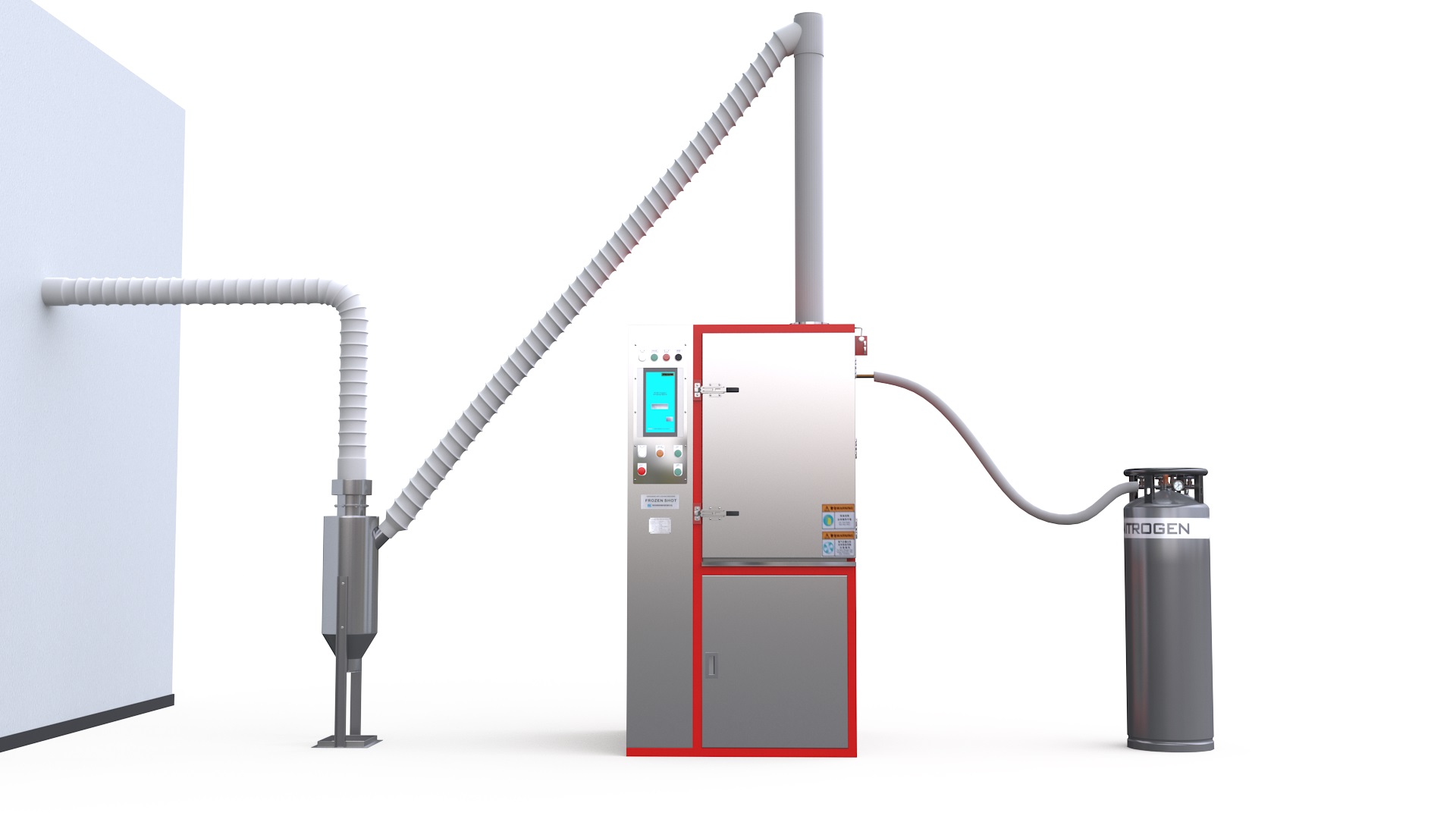
How Does a Cryogenic Deflashing Machine Work? Meta Title: How Does a Cryogenic Deflashing Machine Work? | PEGE Technology Meta Description: Learn how cryogenic deflashing machines use liquid nitrogen to remove flash from rubber and plastic parts in 3 simple steps. Quick guide for engineers and buyers. Quick Answer A cryogenic deflashing machine uses liquid nitrogen to freeze rubber or plastic parts until the thin flash becomes brittle, then blasts them with polycarbonate media to remove the flash — all without damaging the part surface. The process takes 3–10 minutes per batch. • Flash freezes brittle → media blasts it off → part body stays intact The 3-Step Process 1. Freeze. Parts are loaded into a rotating stainless steel drum. Liquid nitrogen is injected to lower the temperature to the material's embrittlement point. Thin flash sections cool faster and become brittle before the thicker part body does. 2. Blast. The drum rotates while polycarbonate media impacts the frozen flash at high speed, cracking it off cleanly. Drum speed and blast duration are adjustable for each material and part geometry. 3. Separate. Broken flash fragments pass through screened perforations in the drum. Finished parts and media are separated, and parts return to ambient temperature — ready for inspection or packaging. For a practical example: when processing NBR O-rings (ID 2mm, OD 20mm) on the PG-80T, we set the parameters as follows — temperature at -75°C, blasting time 5 minutes, media size 1.0mm, blasting speed 6,000 RPM, barrel speed 20 RPM, with approximately 3.5 kg per cycle. This configuration consistently delivers clean flash removal with zero surface damage. Why It Works — Differential Embrittlement The key principle behind cryogenic deflashing is differential embrittlement. Thin flash sections reach embrittlement temperature faster than the thicker part body, creating a temperature gap. Within this window, the media selectively removes brittle flash while the part body remains resilient and unaffected. Unlike grinding or cutting, there is no direct abrasive contact with the part surface itself. What Can Be Processed? Cryogenic deflashing is suitable for rubber (NBR, silicone, EPDM), plastic injection parts (PA, POM), and zinc/magnesium die-cast parts — each requiring different temperature settings. For a detailed material-by-material guide, see our upcoming article: What Materials Can Be Processed by Cryogenic Deflashing? FAQ 1. Does cryogenic deflashing damage the part surface? No. The process targets only the brittle flash; the part body remains elastic at processing temperature and is never abraded. 2. How long does one cycle take? Typically 3–10 minutes per batch, depending on material type and part geometry. 3. How much liquid nitrogen does the machine consume? Consumption varies by model and material. PEGE machines are engineered to achieve 15%–20% lower LN₂ consumption compared to comparable models on the market. Related Products • PG-40T Compact Cryogenic Deflashing Machine — Ideal for small batches and lab testing • PG-80T Cryogenic Deflashing Machine — Medium-volume production workhorse • PG-150T Cryogenic Deflashing Machine — High-volume industrial production PEGE Technology Machine — With nearly 20 years of experience in cryogenic deflashing technology, our SUS304 stainless steel machines are exported to 15+ countries across Europe, Southeast Asia, and South America. Trusted by manufacturers in automotive, medical, electronics, and consumer goods industries. Need a cryogenic deflashing solution for your production line? Contact us today for a free consultation and quote.
Read More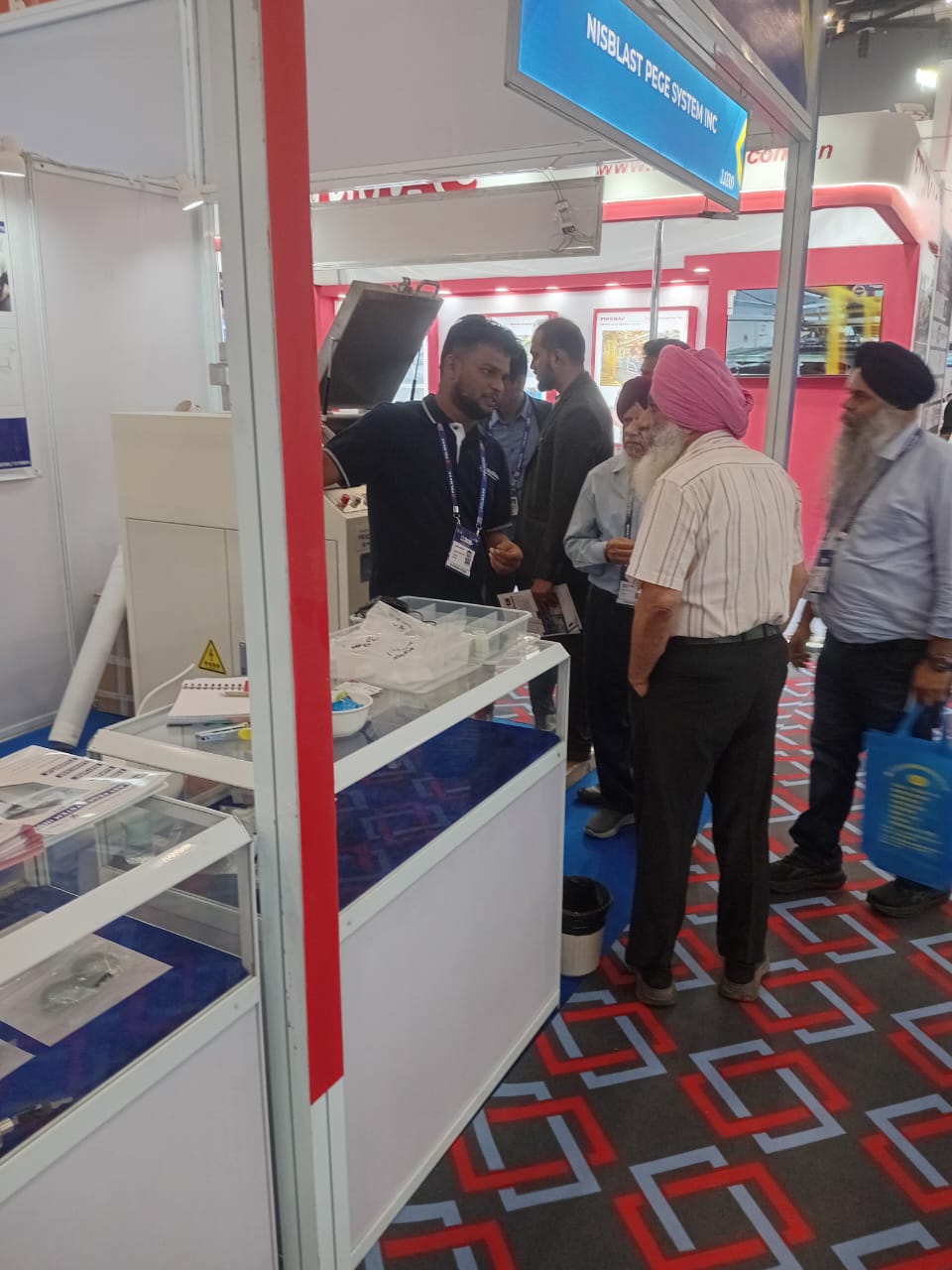
From April 7th to April 10th, IRE 2026-India Rubber Expo 2026 held in New Delhi.Our Indian representative Nisblast PEGE have a demo machine PG-40T for the fair at Booth No. L030.Many customers come to visit and talk with us on this compact and energy saving cryogenic deflashing system.Happy that PEGE PG-40T Cryogenic Deflashing Machine can play its role in supporting the deflashing process for Indian clients.PEGE cryogenic deflashing machine are welcomed by the clients all over the world.
Read More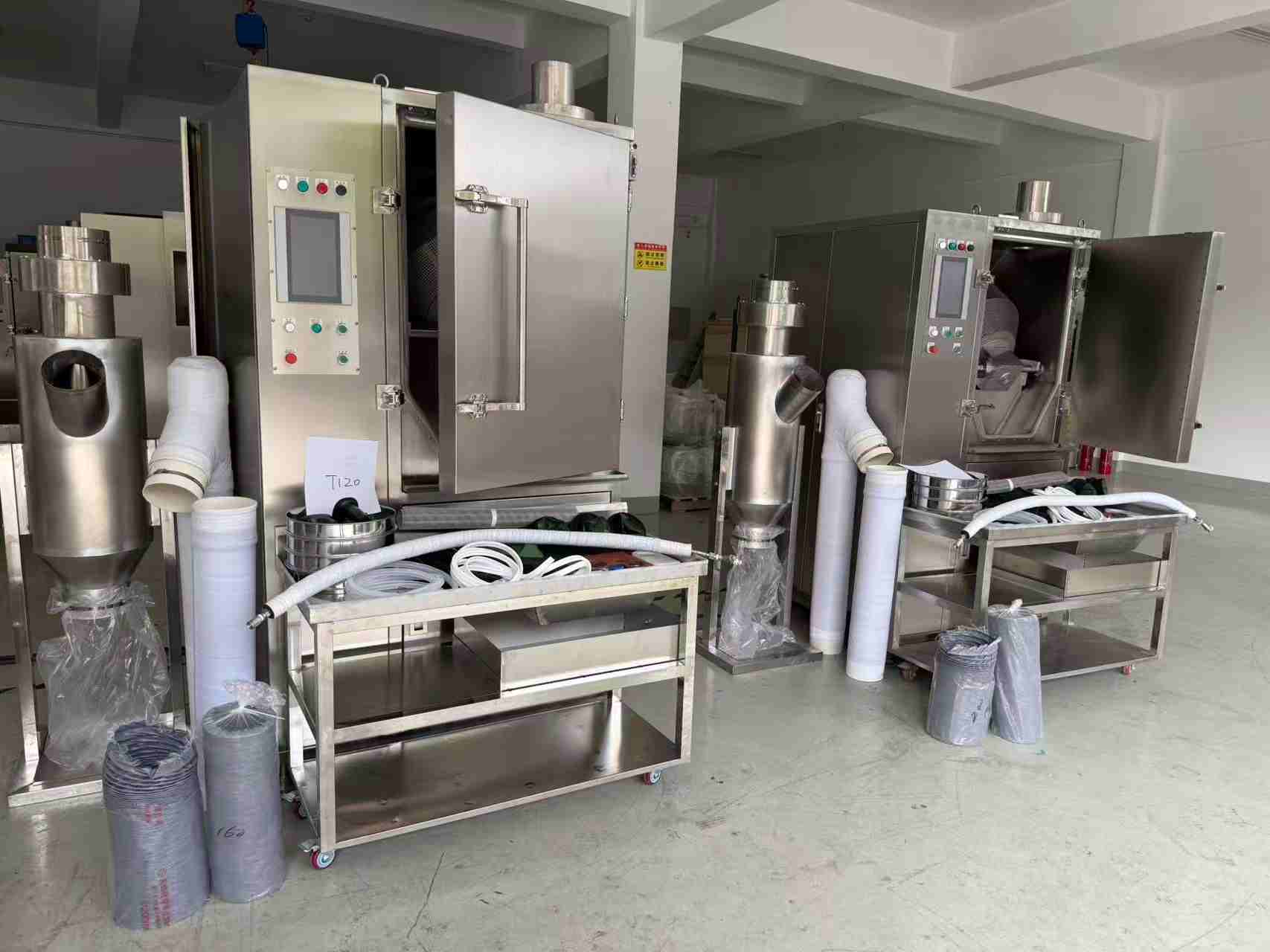
Two great cryogenic deflashing machines PG-80T and PG-120T shipped to Bangkok for client in Thailand for their rubber parts deflashing process. Nanjing PEGE's cryogenic deburring machines with Barcode Scanner to read QR code for quick operation and scientific management. This customer is a well-known reputed multination company who has many branches in southest Asia and China. It is the second time for client to buy our cryogenic deburring machines,Nanjing PEGE can always be your reliable partner.
Read More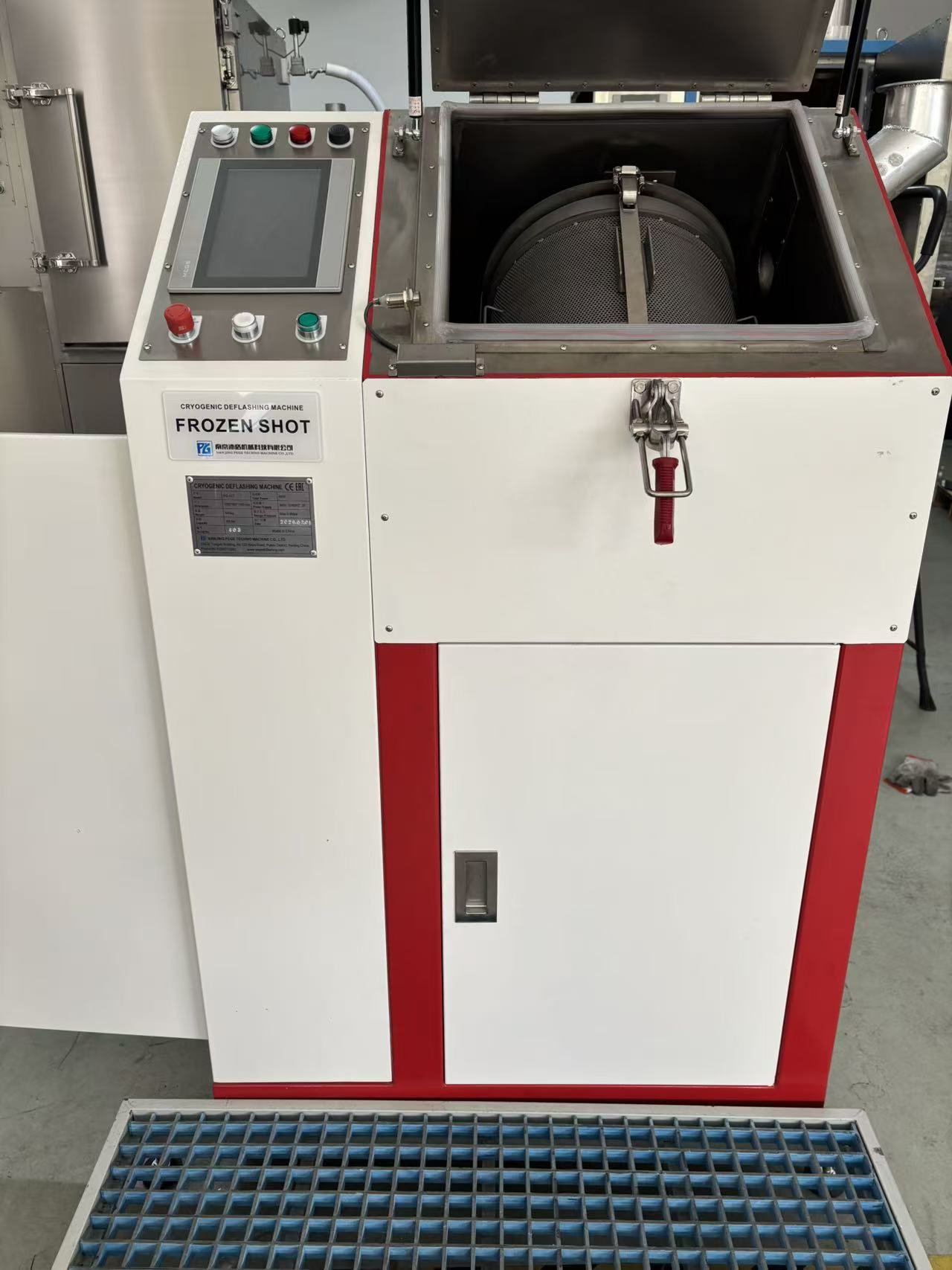
PG-40T is our most compact and smallest capacity cryogenic deflashing machine. After launching to the market, it is warmly welcomed by overseas customers, epecially the customers from India and Russia. Its compact design, lower consumption, powerful blasting system, different parts suitablity let this model nitrogen deflashing machine become a good choice for smaller production volume request. Recently, we get the feedbacks from our client, they say the barrel tumbling area has some shortages. Original Structure, four wheels on the barrel bottom to tumble the barrel Problem 1. The barrel may be wore by blocked wheels. Problem 2. The wheels may be stucked by the media inside. In term of above problems, our technical team starts to develop a new design of the barrel tumbling structure by using different structure to displace the tumbling device. Above design allows a holder for the barrel, the holder is drove by a gear motor with a control shaft. Media will not block its running any more, there will be no wear on the barrel bottom either. The problem is solved totally. Newly improved PG-40T cryogenic deflashing equiment with media blasting has been shipped to India for exhibiition, I belive this new development will increase the barrel lifetime and make the operation run more smoothly. Nanjing Pege Techno Machine Co., Ltd always care about customer's feedback and are happy to improve our cryogenic deflashing machines consistently and scientifically.
Read More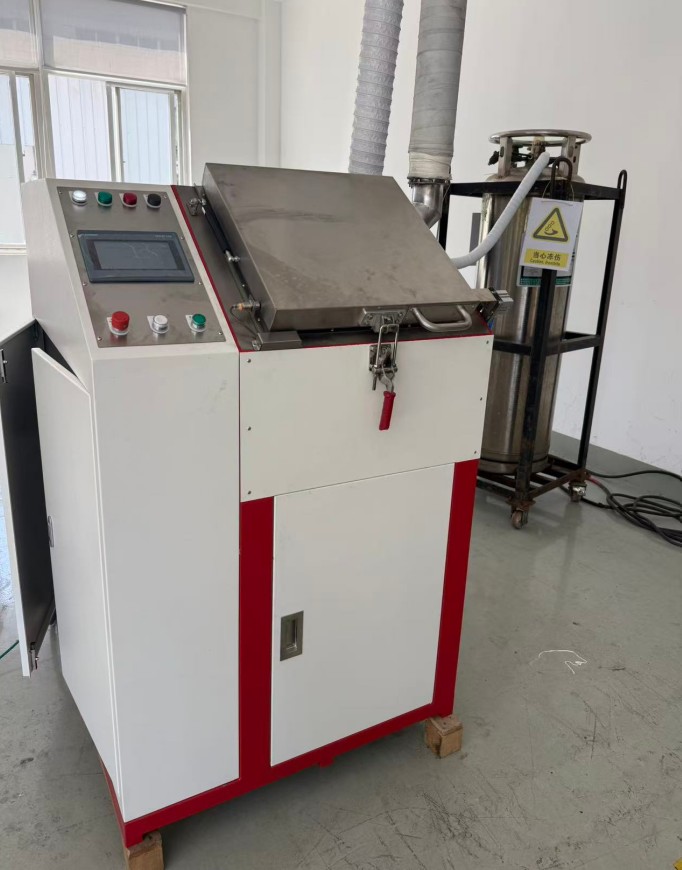
Special Customized Cryogenic Deflashing Machine PG-40T for Russian Customer Shipped on October, 2025 NANJING PEGE is a well-known and reputational cryogenic deflashing machine manufacturer in Nanjing, China. Different models of cryogenic deburring machines are shipped and operated all over the world. On October, we made and shipped a new smaller cryogenic deflasher PG-40T for our customer in Russia to support on deflashing process. This cryogenic deflashing equipment has some special customization points including: We customized two smaller baskets-10liter volume inside of standard baskets of 40liter. HMI, PLC, Inverter are all SIEMENS while the standard controller are Mistubishi. There is a Rego control valve on the inlet of the liquid nitrogen nozzle to control the inlet pressure of LN2 not larger than 10bar. Additional door locker to ensure safety on the machine front cover area. All above adjusments are PEGE'S coordination to meet customer's requirment and improve the machine performance and quality. PEGE ALWAYS KEEPS DELVELOPING GOOD QUALITY MACHINES TO IMPROVE EFFICIENCY AND PRECISION OF CLIENTS.
Read More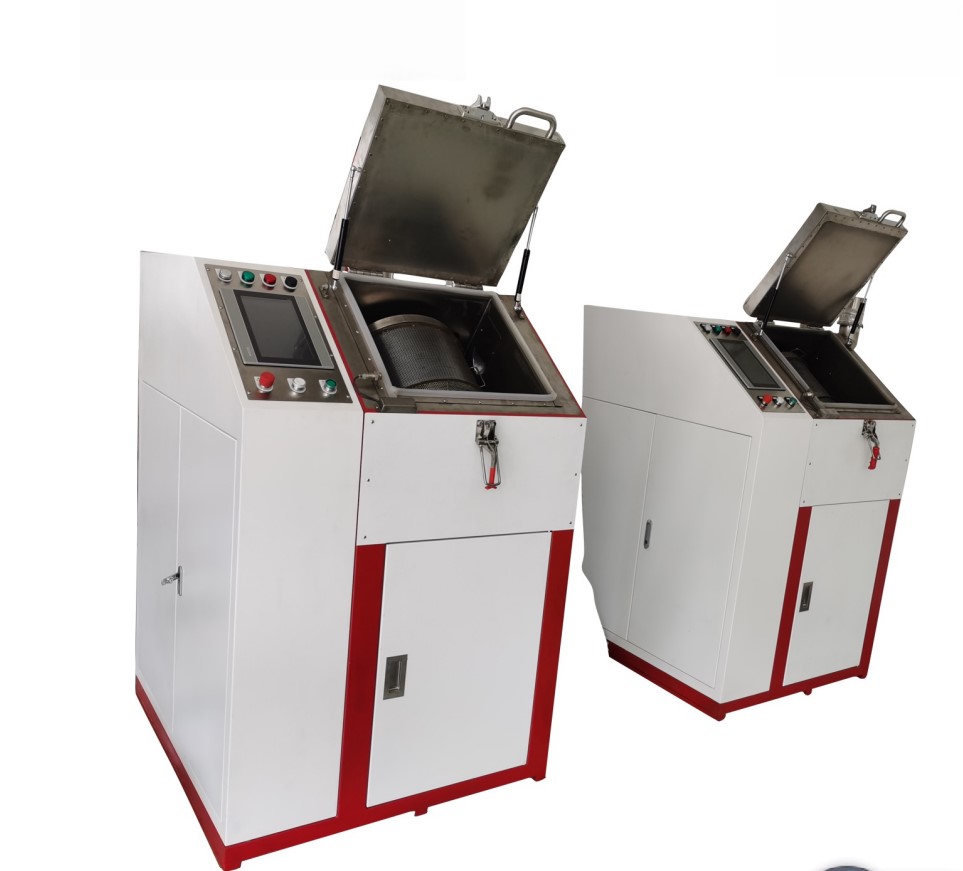
Thanks very much for the trust and recognition from the clients from India. Two set of brand new cryogenic deburring machine for rubber parts deflashing process had been packed well and shipped to Chennai port. PEGE always strive to provide quality and efficient liquid nitrogen cryogenic rubber deflashing machine for customers all over the world.
Read More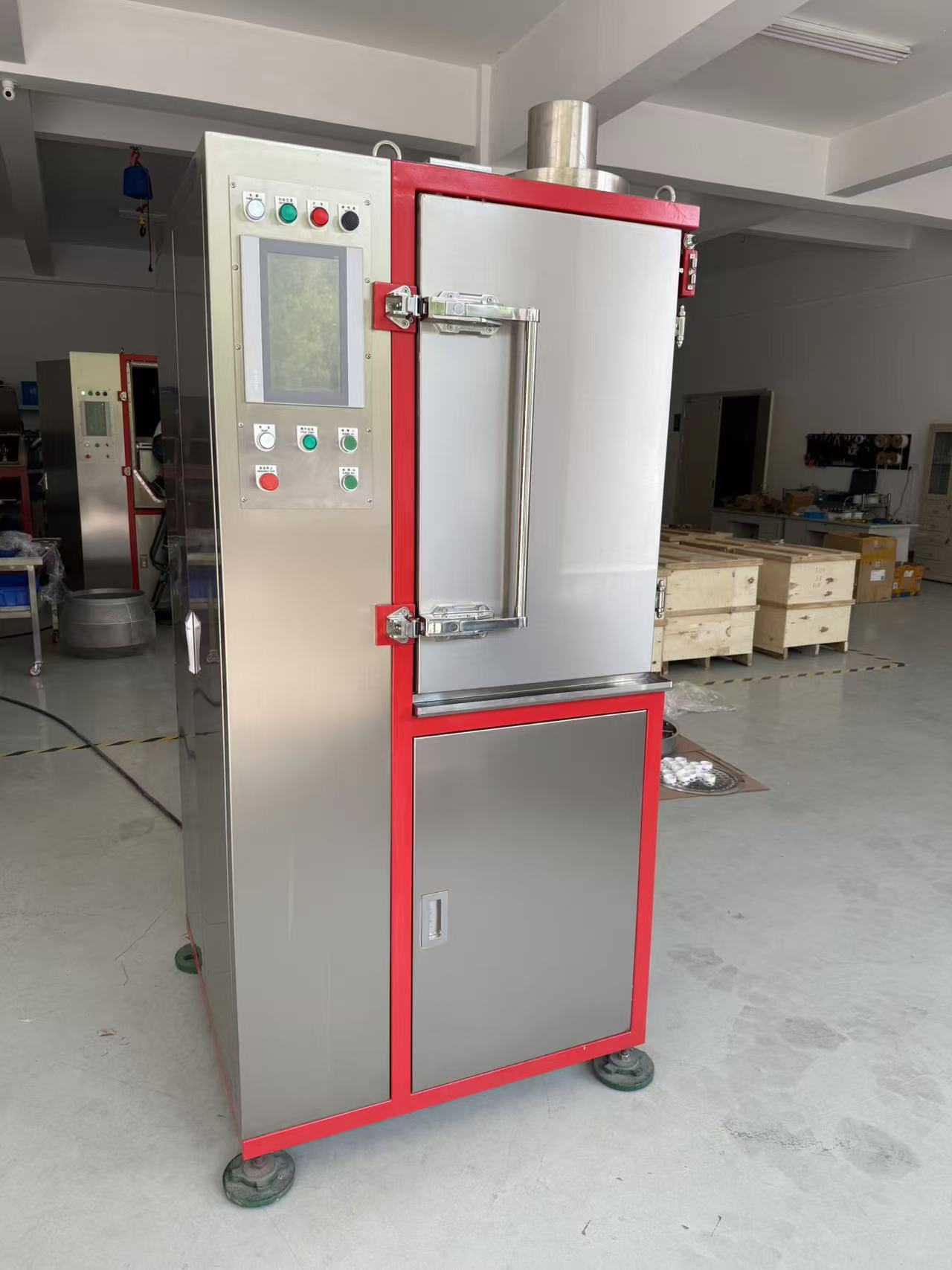
This customer started to contact Nanjing PEGE on the year of 2019, we have been a long time communications on the cryogenic deflashing machine for their rubber products deflashing process. On the year of 2022, customer sent some samples for testing. The rubber parts to be deflashed are rubber O rings. You can see from following photo: There are many flashes which are difficult for manual deflashing. After Cryogenic deflashing, we can get good results without flashes. Even though the deflashing result was acceptable, customer was hesitating to make decision to purchase the cryogenic deburring machine due to the budget problem. They paused the purchase this nitrogen shot blasting deflashing machine. On the year of 2025, last year, customer restarted the project and we talked about the model and the offer and finally we made a deal to sell the cryogenic deflashing equipment Model PG-60T to customer. It is a wonderful machine for automatic rubber deflashing process, it is well designed and well manufacturered. Above is the packed photo for shipment. We believe that our cryogenic deflasher PG-60T will definitely be a good deflashing tool for customer to improve deflashing precision and efficiency.
Read More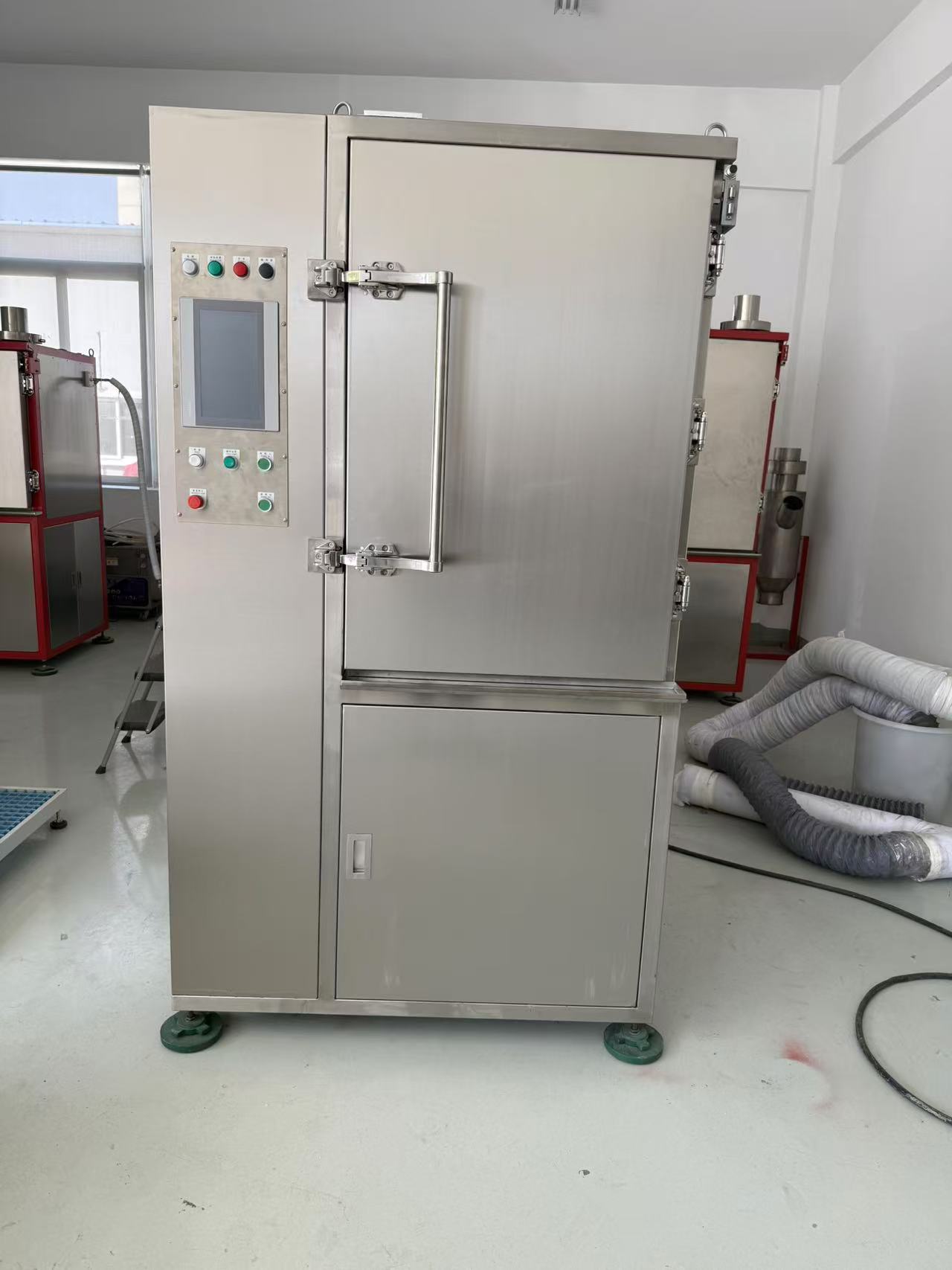
High Quality, Efficient, and Reliable cryogenic deburring/deflashing machine for rubber rings deflashing, which is ordered by an client in South Korea, was shipped on March.Customer visited us at the end of Feburary, he spoken highly of our machine and gave us a rating of 95 points out 100 on this nitrogen deflashing machine, he said it was much better than their old machine from China Taiwan. PEGE's cryogenic deburring machine has its special features: 1. The width of the projectile wheel is increased to 70mm, the range of the projectile wheel is wider, and the projectile efficiency is increased by 20%. 2. Using 10 inch high-end touch screen, which can store more than 20,000 product information, and realise the functions of storing, reading, downloading, editing, host control and upgrading scanner. Improve the tracking and traceability of product handling, and adapt to the intelligent and digital management requirements of modern enterprises. 3. The projectile wheel motor is selected from the reliable brand for long time use in the low temperature environment. 4. The deflector is made of stainless steel, which is free of replacement for life, and our equipment has no impeller rotor, which can reduce the maintenance cost. 5. The sealing plate of the projectile wheel is made of ultra-high polymer UPE, the thickness is increased by 1 times, and the wear-resisting property is increased by 100%. 6. 7.5KW high power motor is used for T120,T150 models, with 600mm width vibrating screen, the processing efficiency and sorting efficiency are obviously improved. 7. Gearbox sealing system has excellent performance, in addition to the labyrinth design, we also add a layer of sealing plate to protect the oil seal. 8. The umbrella gear does not choose straight tooth structure, using helical tooth structure, high degree of overlap, large contact area, wear and tear, increase the service life of the umbrella gear. 9. The door sealing strip is made of imported material and equipped with double heating wire, which has good heating effect and long service life, and there will be no door leakage. 10. Inverted trapezoidal compact design, nozzle built-in, reduce the overall chamber volume, reduce liquid nitrogen consumption. 11. Parts barrel mouth can be closer to the ejection wheel, the injection effect is enhanced, processing efficiency is effectively improved. 12. Separate and independent electrical cabinet and chamber, the electrical cabinet will not be affected by the cold air and dust from the chamber, to improve the cleanliness and use of electrical appliances. and so on. With the above good points on details, Nanjing PEGE's nitrogen deflashing machine is one of the top liquid nitrogen rubber deflashing machines in the world. Thanks very much for his high appraise, and we hope our cryogenic deflasher can realize its value and support well.PEGE always provide high quality and reliable equipments to improve Efficiency and Precision.
Read MoreWe are online 7*24 hours to answer all your questions


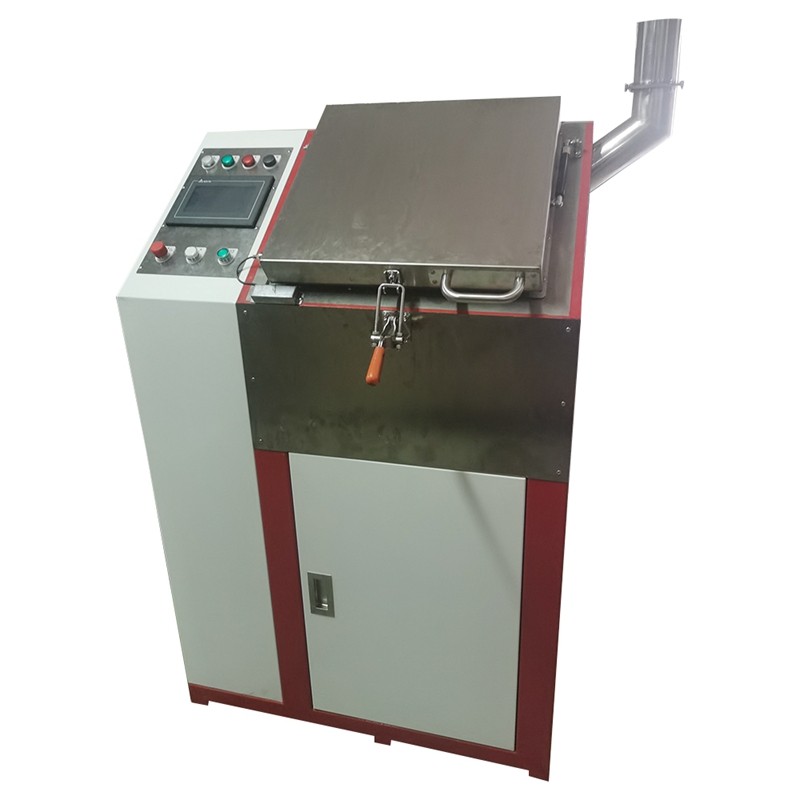 Cryogenic Deflashing Machine PG-40T
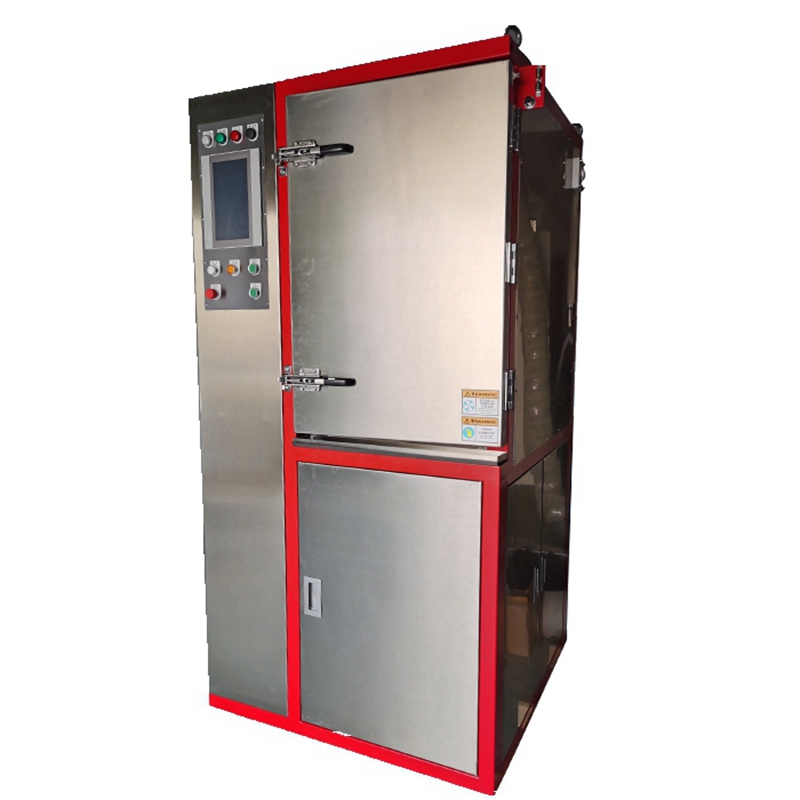 Cryogenic Deflashing Machine PG-60T
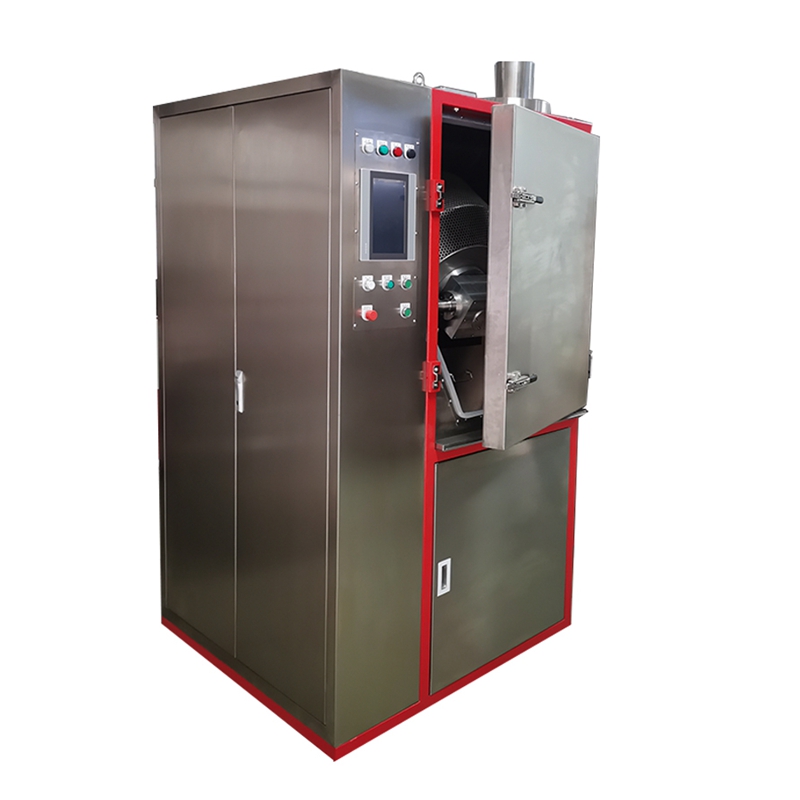 Cryogenic Deflashing Machine PG-80T
 Cryogenic Deflashing Machine PG-120T
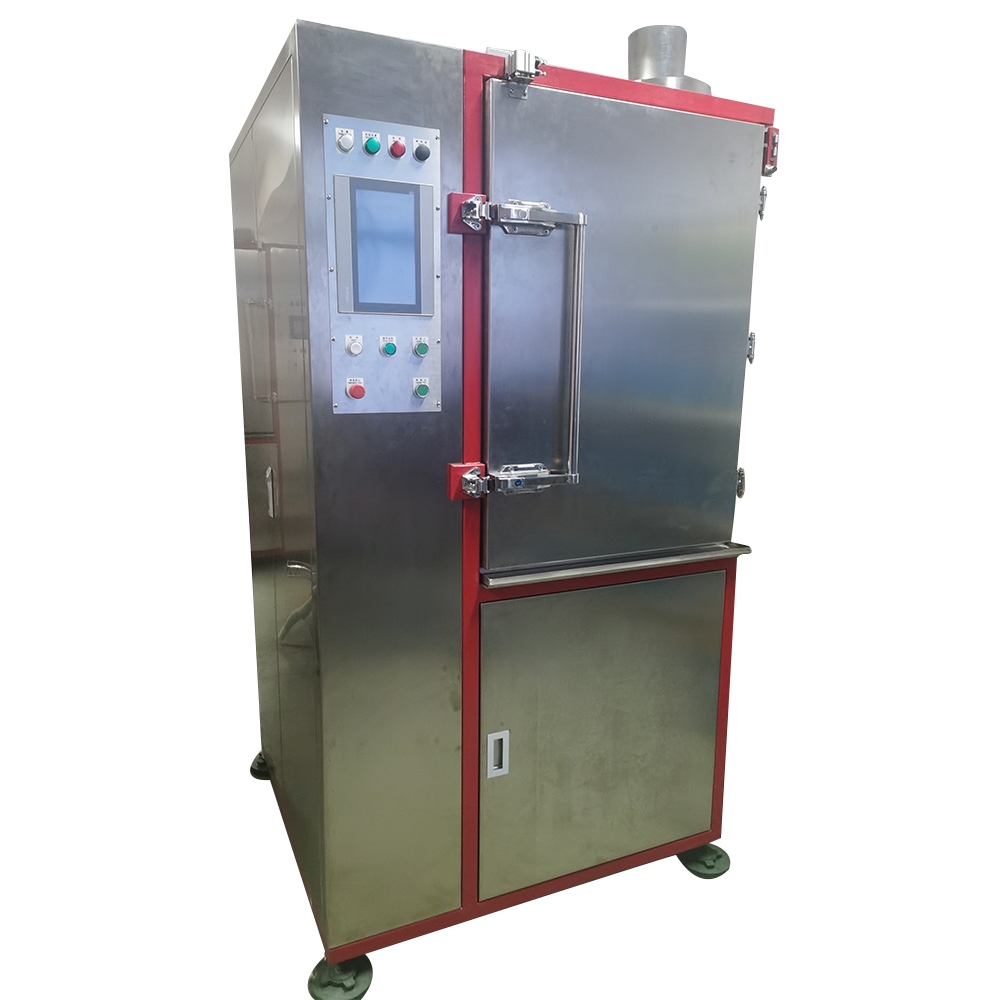 Cryogenic Deburring Machine PG-150T
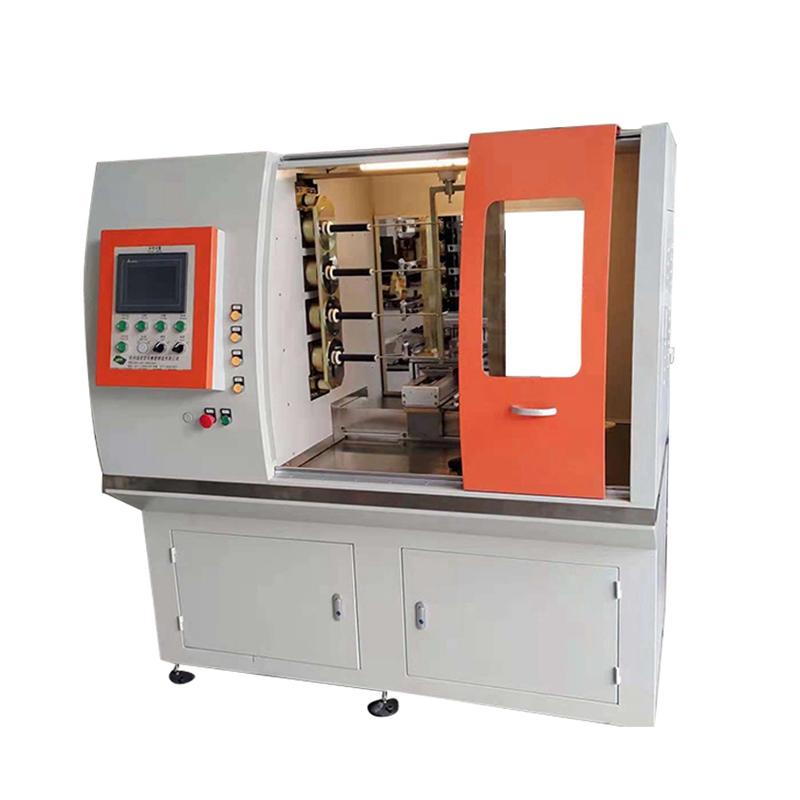 Vacuum Mandrel Washer Gasket Cutting Machine PG-YAQ-1S
 Cryogenic Deburring Machine PG-40T
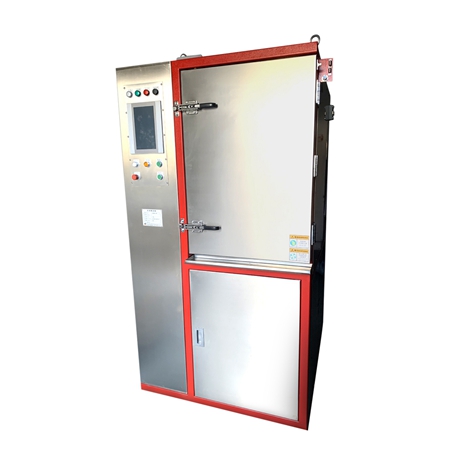 Automatic Cryogenic Rubber Deflashing Machine PG-60T
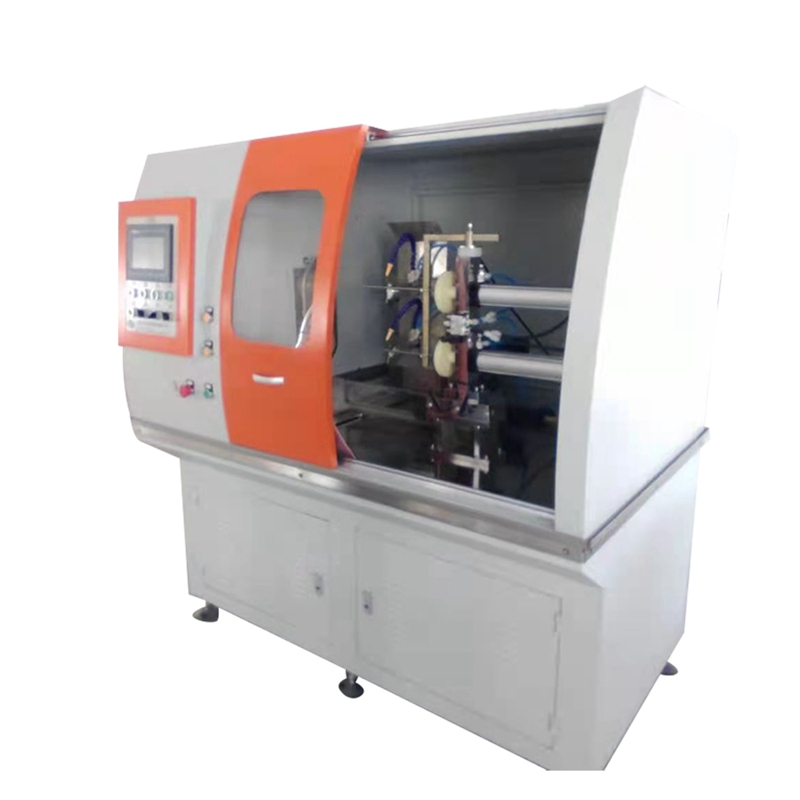 Vacuum Mandrel Cutting Machine PG-YAQ-2S
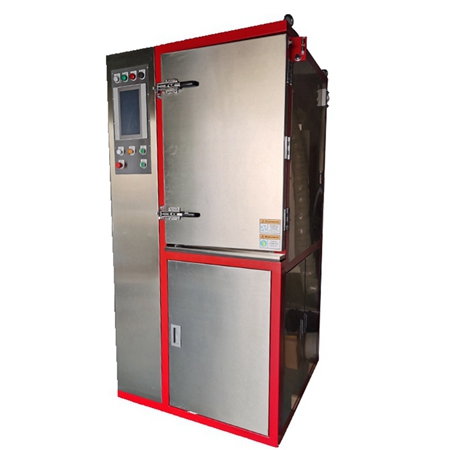 China PEGE Cryogenic Deflasher PG-80T
Vacuum Mandrel Gasket Cutting Machine-4 Shafts PG-YAQ-4S
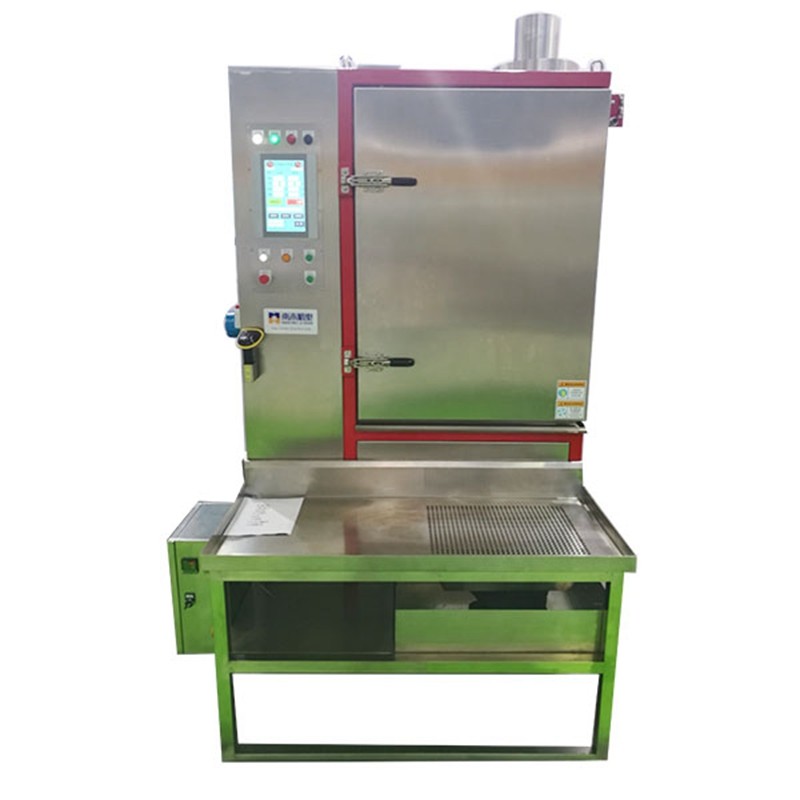 Cryogenic Deflashing Machine Advanced Model PG-AD-120T


 English
 français
 español
 IPv6 network supported