Leave A Message
If you are interested in our products and want to know more details,please leave a message here,we will reply you as soon as we can.


Meta Title: Cryogenic Deflashing vs Manual Deflashing: Cost & Efficiency | PEGE
Meta Description: Cryogenic vs manual deflashing compared on labor cost, throughput, consistency and scrap. See verified data — a real plant that cut ~100 hand trimmers to 6, payback of 8–9 months, and a worked labor-cost model.
Article overview: Should a rubber molder, plastics plant, or die-caster keep trimming flash by hand, or invest in a cryogenic deflashing machine? This guide compares the two methods directly — how each works, what each costs at low and high volumes, and how they differ in consistency, scrap, and labor. It includes a transparent labor-cost model built on official wage data (U.S. BLS and Eurostat), a side-by-side comparison table, the reason real-world payback runs around 8–9 months rather than the theoretical minimum, and verified customer installations — including a Chongqing automotive rubber plant supplying Changan Group that reduced roughly 100 hand trimmers to one machine plus 5–6 operators and, after ~12 years on another brand, switched to a PEGE PG-120T in 2025. It ends with a practical ROI framework and FAQ so procurement and operations teams can decide with their own numbers. Written from a manufacturer's perspective — NANJING PEGE TECHNO MACHINE CO., LTD, builder of the Frozen Shot PG-series.
Manual deflashing — operators removing flash with knives, scissors, fixtures, or hand tools — needs almost no capital and is flexible, but its cost scales directly with headcount, quality varies between operators, and complex geometries are hard to reach. Cryogenic deflashing freezes the thin flash until brittle and removes it with high-speed polycarbonate media in a controlled, recipe-driven cycle; it needs capital expenditure plus liquid nitrogen, media, and power, but one operator can run a machine that processes 150–600 kg/day with uniform results and lower scrap. The two methods cross over as volume rises: at regular production volumes, the labor saved by a machine typically repays its cost in roughly 8–9 months, based on verified PEGE customer installations. At a high-volume automotive rubber plant in Chongqing (a Changan Group supplier), the same transition cut a trimming team from about 100 people to one machine plus 5–6 operators (around 94%); after running another brand for about twelve years, that company expanded in 2025 with a PEGE PG-120T, rating it higher for throughput, efficiency, and finish. Manual deflashing remains the rational choice for very low or irregular volumes, for parts with genuinely fragile edges, and for a few materials that do not embrittle cleanly.
• Manual deflashing is a labor-scaled cost: more parts require proportionally more workers. Cryogenic deflashing is a capital- plus operating-cost model whose per-part cost falls as utilization rises.
• A cryogenic machine is run by one operator and delivers recipe-controlled, batch-to-batch consistency; hand trimming quality depends on the individual operator.
• Liquid nitrogen, polycarbonate media, and power are real recurring costs — they are the difference between the theoretical "labor-only" payback and the verified ~8–9 month payback seen in real factories.
• A documented automotive case shows the extreme of this effect: roughly 100 hand trimmers replaced by one machine plus 5–6 people at an output of about 35 million parts/year.
• Cryogenic deflashing does not eliminate every second of hand work: inspection, sorting, and occasional touch-up on difficult parts usually remain.
• Manual deflashing is still the better fit below roughly 50–100 kg/day or for irregular demand; a deflashing service job-shop is the middle option between the two.
Manual (hand) deflashing means operators remove the excess material left at parting lines, gates, and vents using hand tools — trimming knives, scissors, blades, fixtures, or sometimes a rotating fixture against a fixed blade. It requires almost no investment beyond tools and a bench, it can be started immediately, and a skilled operator can adapt to almost any part shape.
Its limitations are structural:
• Cost rises linearly with volume. Every additional kilogram of parts needs additional operator-hours; there is no economy of scale.
• Results vary. Finish quality depends on operator skill, fatigue, and turnover, so two batches — or two parts in the same batch — can look different.
• Damage risk. On elastic rubber and soft plastics, a blade can pull, stretch, nick, or tear the part body instead of just the flash, creating scrap and re-inspection.
• Geometry limits. Undercuts, blind holes, thin webs, and intricate parting lines are slow or impossible to reach by hand.
• Labor market risk. In many regions it is increasingly difficult to hire and retain workers for repetitive trimming work.
Manual deflashing is most often found in small shops, in low-volume / high-mix production, and as a secondary touch-up step after an automated process.
Cryogenic deflashing uses liquid nitrogen to cool parts until the thin flash becomes brittle while the thicker part body still retains its toughness. A high-speed wheel then projects polycarbonate media at the tumbling parts, breaking away the brittle flash without cutting tools touching the part. Temperature, cycle time, media size, blast speed, and barrel speed are stored as recipes, so the same part runs identically every time.
For a full explanation of the cooling and blasting sequence, see our article How Does a Cryogenic Deflashing Machine Work?
The process is suited to most molding rubbers, filled engineering plastics (such as PA+GF, PC+GF, POM, PPS, PEEK, and thermoplastic elastomers), and zinc/magnesium die-castings — but not to every material. For the complete material list, see our materials guide.
|
Factor |
Cryogenic Deflashing |
Manual Deflashing |
|
Upfront investment |
Machine purchase + installation (a compact machine starts around US$25,000) |
Minimal (hand tools, benches) |
|
Main ongoing cost |
Liquid nitrogen, polycarbonate media, power, 1 operator |
Direct labor — scales with volume |
|
Labor per shift |
1 operator loads/runs/unloads |
Multiple trimmers (often dozens at volume) |
|
Consistency |
Recipe-controlled, identical every batch |
Operator-dependent, variable |
|
Surface / sealing damage |
None when parameters are correct — only flash is removed |
Risk of nicks, tears, and stretch |
|
Complex geometries |
360° media reaches undercuts, holes, fine parting lines |
Limited access; slow on intricate parts |
|
Throughput |
150–600 kg/day depending on model |
Slow; bounded by headcount |
|
Scrap rate |
Minimal |
Higher; rises with fatigue and turnover |
|
Best fit |
Regular, medium-to-high volume; quality-critical parts |
Low/irregular volume; fragile or unsuitable parts |
The core economic difference is how cost behaves as volume grows.
• Manual deflashing is a variable, labor-scaled cost. If output doubles, trimming labor roughly doubles. There is no leverage: higher volume never makes each part cheaper to trim.
• Cryogenic deflashing is a fixed-plus-operating-cost model. The machine purchase is fixed; liquid nitrogen, media, and power rise with output, but labor does not — one operator supervises the machine regardless of whether it is half or fully loaded. As utilization rises, the fixed machine cost is spread over more parts, so the cost per part falls.
This is why the comparison usually favors hand work at very low volumes and machine work at regular production volumes — and why the decision should be made on your daily output and local labor rate rather than on the machine price alone.
For the machine price tiers by capacity, see our price guide.
Liquid nitrogen and media are the costs people focus on, but the cost of hand trimming is labor — and the most useful number is the fully-loaded annual cost of one trimmer in your region.
Using official wage figures (U.S. BLS Occupational Employment and Wage Statistics, 2025 median for hand laborers/material movers at US$19.35/hour; and Eurostat 2025 hourly labour cost for Hungary at €15.2/hour) over 8 hours × 250 working days:
|
Region (source) |
Annual labor cost per manual trimmer |
|
United States (BLS, 2025) |
~US$38,700 |
|
Hungary (Eurostat, 2025) |
~€30,400 |
If a machine replaces manual trimmers and is run by one retained operator, the gross annual labor saving before any machine operating costs is:
|
Trimmers replaced |
U.S. saving (BLS) |
Hungary saving (Eurostat) |
|
10 |
~US$348,300 |
~€273,600 |
|
20 |
~US$735,300 |
~€577,600 |
|
40 |
~US$1,509,300 |
~€1,185,600 |
These are gross labor figures. They show why the incentive to automate is large — but they should not be read as spendable savings, because they do not yet subtract the costs below.
Wage sources: U.S. Bureau of Labor Statistics, OEWS 2025; Eurostat hourly labour costs, 2025. Labour costs include employer social contributions where stated by Eurostat. Local wage levels and employer contributions vary; substitute your own payroll figures.
A calculation that divides a ~US$30,000 machine by the gross labor saving above would suggest a payback of well under a month. Real factories do not achieve that — and it is important to be honest about why:
1. Liquid nitrogen cost. LN₂ is delivered at different prices in every region and is consumed on every cycle. This is the largest operating cost of the process.
2. Polycarbonate media. Media is reusable for a few hundred cycles but is consumed and replaced over time.
3. Power and maintenance. Electrical load (4–9 kW depending on model) plus wear parts and routine maintenance.
4. Residual hand labor. Parts still need inspection and sorting, and a minority of difficult parts may need light touch-up. Plants rarely remove the entire theoretical trimming headcount on day one.
5. Landed cost and ramp-up. Shipping, import duties, installation, and an initial learning period add to the effective investment.
Once these are included, the payback that real PEGE customers document is about 8–9 months. That verified figure — not the theoretical labor-only number — is the one to build a budget around.
The general payback formula is:
Payback (months) = (Machine landed price + installation) ÷ [(monthly labor cost of replaced workers) − (monthly LN₂ + media + power + maintenance + residual labor)] × 12
PEGE's optimized insulation and negative-pressure media circulation reduce LN₂ consumption by 15–20% versus comparable foreign-brand machines, which shortens the payback because LN₂ is the largest term in the denominator.
These PEGE Frozen Shot installations replace hand trimming at different scales:
|
Customer |
Country |
Model |
Daily output |
Payback period |
|
Skellerup |
New Zealand |
PG-60T |
150 kg/day |
~9 months |
|
Pagum |
Poland |
PG-120T |
300 kg/day |
~9 months |
|
Polytek |
USA |
PG-150T |
500 kg/day |
~8 months |
Notice that payback stays around the same range even as output and machine size grow: a larger machine costs more but also displaces more trimming labor.
Consider a well-established automotive rubber parts manufacturer in Chongqing and long-term supplier to the Changan Automobile Group (name withheld at its request). It molds an EPDM sealing-hole cover at roughly 35 million pieces per year. After first piloting outsourced cryogenic processing and thinning its flash (from ~0.25 mm to within ~0.10 mm), the company brought a 120 L cryogenic deflashing machine (another brand) in-house in 2013. The result:
• Trimming headcount fell from about 100 people to one machine plus 5–6 operators — roughly a 94% reduction (about RMB 3.99M / ≈US$0.56M gross labor saved per year at the customer's wage assumption).
• Output rose from ~26M to ~35M pieces (+32–35%), with about 42 tonnes/year of EPDM saved and processing cost cut from RMB 8.62/kg to 3.35/kg.
• Total annual savings and added value: about RMB 10.2 million (≈US$1.44M).
In 2025, after roughly twelve years on the original brand, the company added capacity and switched to a PEGE Frozen Shot PG-120T. It reports a clear step up from its long-standing machine — higher throughput and capacity, higher efficiency, and better, more uniform deflashing results with less rework. (The full standalone case study, including the operating-cost breakdown, is published separately.)
What this proves: at very high volumes the labor effect is not marginal — a single cryogenic line can replace an entire trimming department. And when a buyer with 12 years of hands-on experience chooses PEGE for its next machine and rates it higher on capacity, efficiency, and finish, that switch is based on measured performance. The reason such plants still report measured payback rather than an instant return is the recurring LN₂, media, power, and residual-labor cost detailed above.
The comparison is often framed only as "machine price versus wages," but quality differences also hit the cost model:
• Scrap from hand tools. Nicked sealing surfaces and torn edges turn molded parts into scrap and trigger re-inspection. Cryogenic cycles remove flash without a cutting edge contacting the part, reducing this loss.
• Consistency as a cost saver. Recipe-stored parameters remove batch-to-batch variation, which reduces inspection time and helps with customer quality audits and traceability.
• Access to difficult areas. Media reaches undercuts and fine parting lines that hand work simply cannot, so parts that are expensive or impossible to trim manually become practical.
• Throughput certainty. A machine's cycle and load are predictable; hand-trimming throughput fluctuates with staffing and fatigue, making production planning harder.
For the detailed quality benefits on rubber components, see our article on benefits of cryogenic deflashing for rubber parts.
Cryogenic deflashing is not always the answer. Keep hand work — or choose a service — in these situations:
• Very low or irregular volume. Below roughly 50–100 kg/day, or with unpredictable demand, the machine may not be utilized enough to justify the purchase.
• Unsuitable materials. A few materials do not embrittle cleanly or are too soft/unfilled for consistent results; confirm material suitability before assuming the process applies.
• Fragile edges and delicate structures. Parts with genuinely vulnerable thin features need careful evaluation rather than a standard cycle.
• Silicone (VMQ) is a special case. Silicone is the most difficult rubber to deflash — success depends on rounded parts without fragile edges, very fine non-sticking flash, temperatures below −110°C, and high LN₂ use. Always run samples first rather than assuming it will work.
• No budget or infrastructure. If liquid nitrogen supply or capital is not available, hand work or an outside service is the pragmatic option.
The middle option — a deflashing service. In North America and Europe, service job-shops will process your parts for a fee on machines they own. This avoids capital outlay at low volumes; switch to owning a machine when regular volume makes the per-part service cost more expensive than in-house production.
Gather these inputs before requesting quotes:
1. Daily/weekly output in kg, and how steady it is across the year.
2. Current trimming headcount and fully-loaded local labor cost.
3. Part mix: materials, part size range, and flash condition.
4. Local delivered liquid nitrogen price and expected supply arrangements.
5. Quality pain points: current scrap rate, re-inspection time, and customer quality complaints.
6. Whether any parts cannot be hand-trimmed well today.
Then compare scenarios over the same period: continue hand work; use an outside service; or buy a machine sized to your output. A reputable manufacturer should help size the machine, give realistic parameter guidance, and — critically — run a sample test on your actual parts before you commit.
1. Is cryogenic deflashing cheaper per part than manual deflashing?
At regular production volumes, yes. Hand trimming cost is essentially operator labor and does not fall as volume grows; a cryogenic machine uses one operator plus liquid nitrogen, media, and power, and its per-part cost falls as utilization rises. At very low or irregular volumes, hand work or a paid deflashing service is usually cheaper because the machine is not fully utilized.
2. What is the real payback period on a cryogenic deflashing machine?
Based on verified PEGE installations, payback runs about 8–9 months across different machine sizes — for example 150 kg/day on a PG-60T in New Zealand, 300 kg/day on a PG-120T in Poland, and 500 kg/day on a PG-150T in the USA. At a high-volume automotive plant in Chongqing, the transition went even further, replacing roughly 100 hand trimmers with one machine plus 5–6 operators; after ~12 years on another brand that customer switched to a PEGE PG-120T in 2025, citing higher throughput, efficiency, and better results. Exact payback depends on local wages, LN₂ price, utilization, and how many trimmers are genuinely displaced.
3. What recurring costs does cryogenic add that manual doesn't?
Liquid nitrogen is the largest, followed by polycarbonate media (replaced after a few hundred cycles), electricity (4–9 kW depending on model), and wear-part maintenance. These must be subtracted from the labor saving when calculating payback; ignoring them produces an unrealistically short payback estimate.
4. Does a cryogenic machine eliminate manual deflashing labor completely?
Usually not 100%. One operator runs the machine instead of dozens of trimmers, but parts still require inspection and sorting, and a minority of difficult parts may need light touch-up. The documented automotive case retained 5–6 people alongside the machine. Planning for a small amount of residual hand work gives a more accurate ROI.
5. At what production volume does buying a machine make sense?
A common break-even zone is roughly 50–100 kg/day of steady output, but it depends heavily on local labor cost and LN₂ price. Below that, or with irregular demand, a deflashing service shop avoids capital outlay; well above it, ownership typically pays back within months. A sample test and a calculation with your own numbers are the reliable way to confirm.
6. Does cryogenic deflashing reduce scrap compared with hand trimming?
Yes, in most cases. Hand knives can nick, stretch, or tear elastic parts; cryogenic cycles remove only the embrittled flash with polycarbonate media, leaving sealing surfaces and dimensions intact. Recipe control also removes operator-to-operator variation, reducing re-inspection.
7. What inputs do I need to calculate my own ROI?
Your steady output in kg/day, current trimmer headcount and fully-loaded local wage, the delivered price of liquid nitrogen, your part/material mix, and your current scrap and re-inspection rate. Put them into the payback formula in this article, or ask PEGE to help model the scenarios and run a free sample test on your parts.
• PG-40T Cryogenic Deflashing Machine — Compact 40 L model for small batches and R&D (150–200 kg/day)
• PG-60T Cryogenic Deflashing Machine — Versatile 60 L model for mixed rubber and plastic production (200–250 kg/day)
• PG-80T Cryogenic Deflashing Machine — 80 L workhorse with a 300 mm blast wheel (250–300 kg/day)
• PG-120T Cryogenic Deflashing Machine — 120 L high-capacity model with a 350 mm wheel (400–500 kg/day)
• PG-150T Cryogenic Deburring Machine — Largest 150 L model for high-volume molding (500–600 kg/day)
• Full range: PEGE Cryogenic Deflashing Machine series
NANJING PEGE TECHNO MACHINE CO., LTD is a specialized manufacturer of cryogenic deflashing and deburring machines — the Frozen Shot PG-series — with 15 years of cryogenic deflashing expertise. Every PEGE machine uses full SUS304 stainless steel construction, a cooling range of −130°C to +50°C, 250–350 mm blast wheels running 3,000–7,200 rpm, branded electrical components (Mitsubishi/Siemens/Schneider), and a 15-inch HMI with recipe storage and parameter logging. Optimized insulation and negative-pressure media circulation cut liquid-nitrogen consumption by 15–20% versus comparable foreign-brand machines — directly improving payback. PEGE equipment has been delivered to customers in 15+ countries, supported by CE certification, a 1-year free warranty, lifetime after-sales service, and an English-language response within 24 hours.
Whether you are replacing a trimming line of dozens of workers, evaluating a service versus owning equipment, or dealing with parts that hand trimming cannot handle, PEGE can size the right model and run a free sample test on your parts before you order.
📩 [Contact PEGE today](https://www.pegedeflashing.com/contact-us) for a machine recommendation, a free deflashing trial on your parts, and a quotation — we respond within 24 hours.
We are online 7*24 hours to answer all your questions


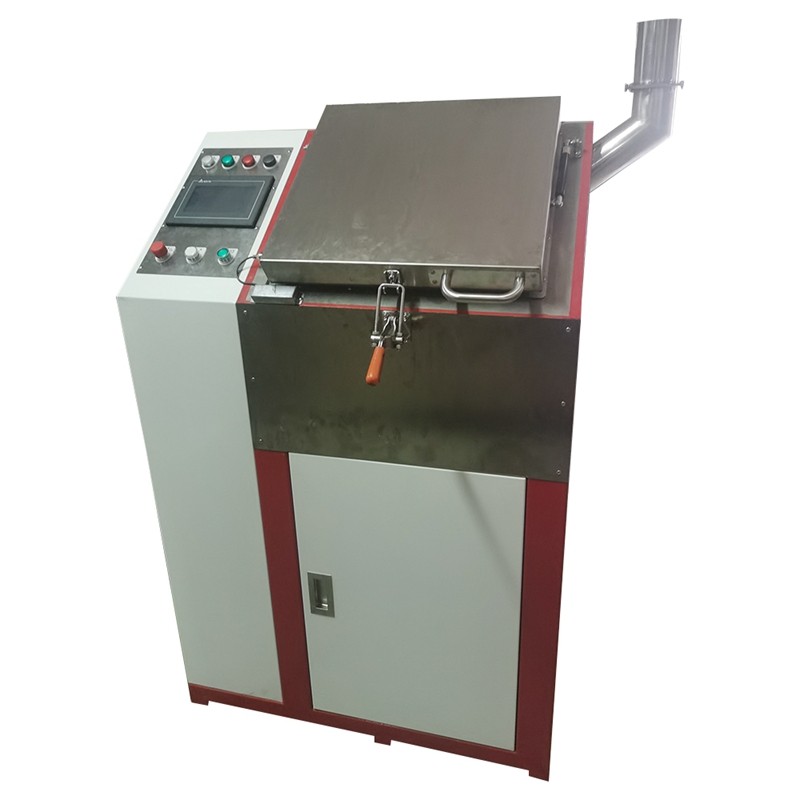 Cryogenic Deflashing Machine PG-40T
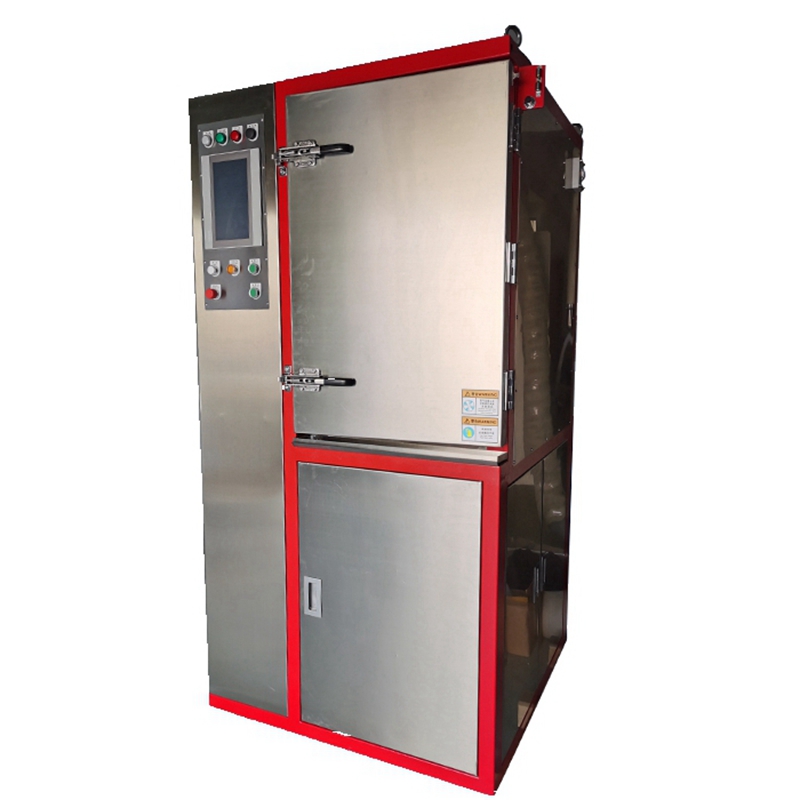 Cryogenic Deflashing Machine PG-60T
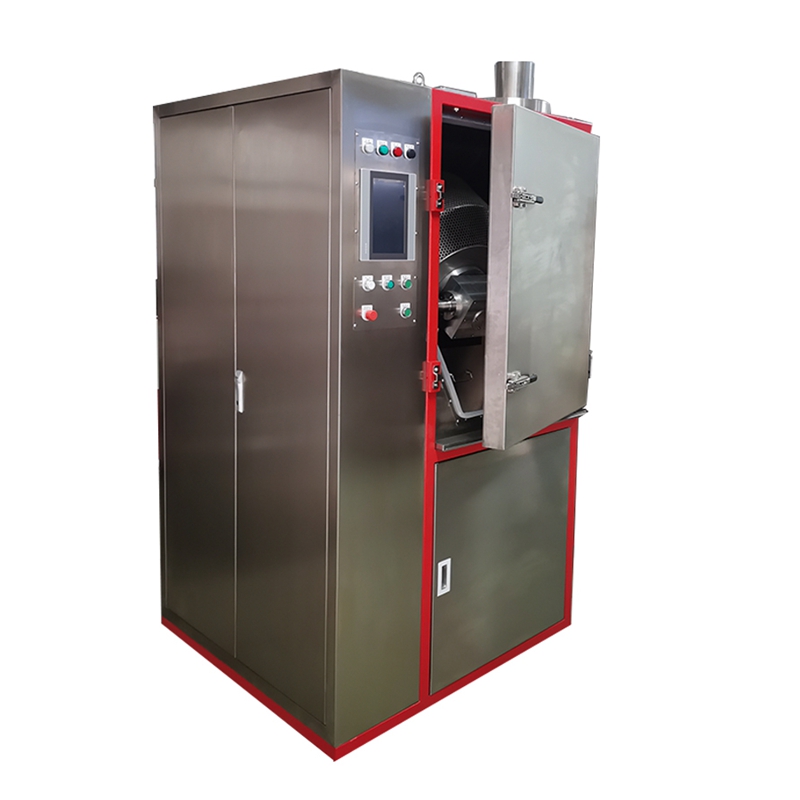 Cryogenic Deflashing Machine PG-80T
 Cryogenic Deflashing Machine PG-120T
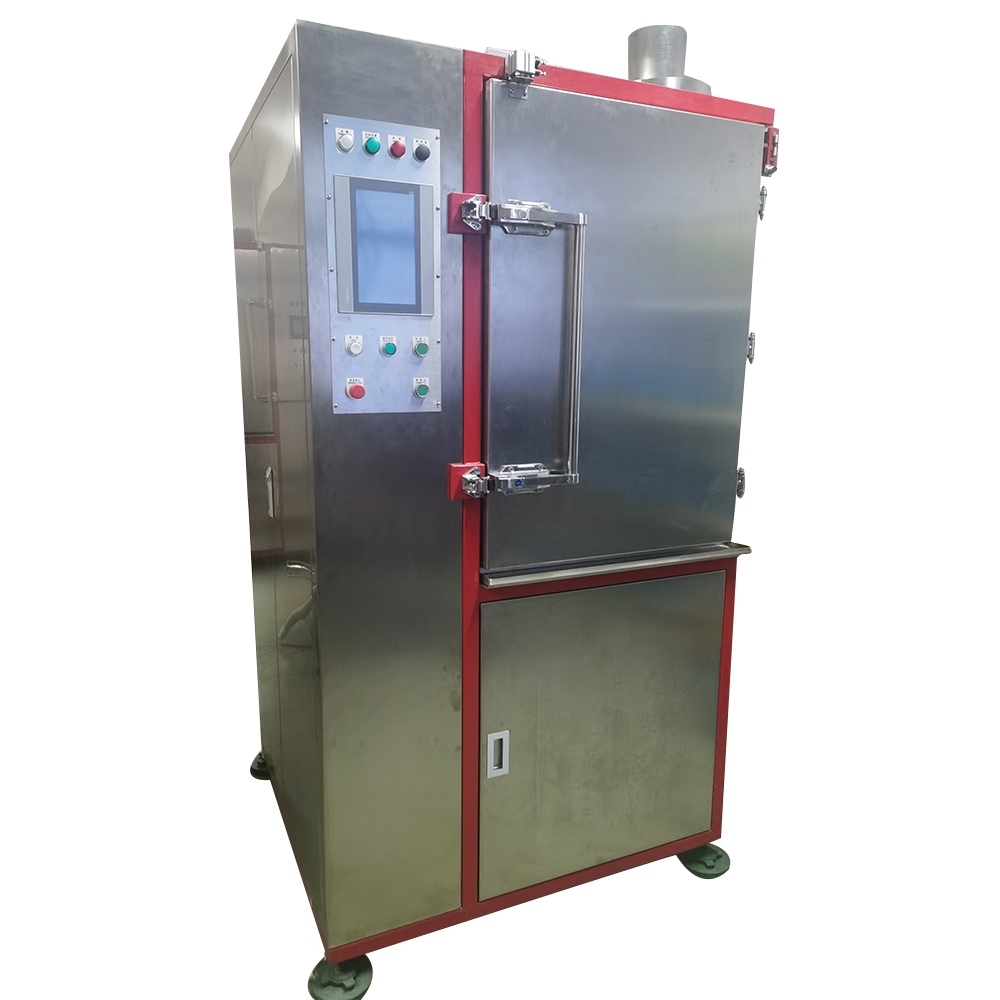 Cryogenic Deburring Machine PG-150T
 Vacuum Mandrel Washer Gasket Cutting Machine PG-YAQ-1S
 Cryogenic Deburring Machine PG-40T
 Automatic Cryogenic Rubber Deflashing Machine PG-60T
 Vacuum Mandrel Cutting Machine PG-YAQ-2S
 China PEGE Cryogenic Deflasher PG-80T
Vacuum Mandrel Gasket Cutting Machine-4 Shafts PG-YAQ-4S
China PEGE Cryogenic Deflasher PG-80T
Vacuum Mandrel Gasket Cutting Machine-4 Shafts PG-YAQ-4S
 Cryogenic Deflashing Machine Advanced Model PG-AD-120T


 English
 français
 español
 IPv6 network supported