Leave A Message
If you are interested in our products and want to know more details,please leave a message here,we will reply you as soon as we can.


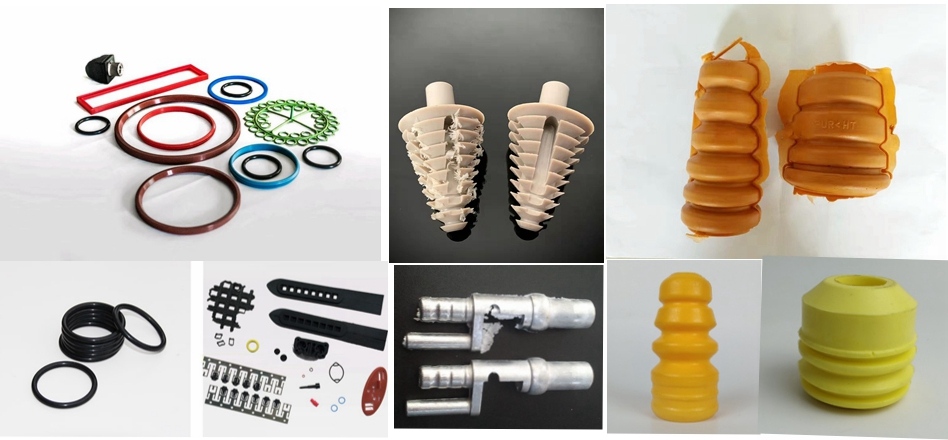
What Materials Can Be Processed by Cryogenic Deflashing? Meta Title: What Materials Can Be Processed by Cryogenic Deflashing? | PEGE Meta Description: Complete guide to materials for cryogenic deflashing: which rubbers, engineering plastics, and die-cast metals work — and which don't. Includes verified processing parameters and real-world examples. Quick Answer Cryogenic deflashing works on three broad material categories: rubber/elastomers (NR, NBR, HNBR, ACM, EPDM, FKM, and more), engineering plastics (PA+GF, PC+GF, POM, PPS, PBT, PET, PEEK, and most thermoplastic elastomers such as TPU, TPO, TPV, EVA), and zinc/magnesium die-cast alloys. However, it is not a universal solution — certain unfilled or general-purpose plastics such as pure PA, pure PC, ABS, PP, HDPE, and ETFE are not suitable based on years of production experience. Silicone is also difficult to process with a low success rate. The process relies on the principle that thin flash becomes brittle at cryogenic temperatures before the thicker part body does — a property that only applies when there is a sufficient differential between the two. PEGE Frozen Shot machines offer adjustable temperature settings down to -130°C, but we always recommend sample testing before committing to production. Key Takeaways • Cryogenic deflashing is effective for rubber, a wide range of engineering plastics, thermoplastic elastomers, and zinc/magnesium die-castings — but not every material is suitable. • Rubbers generally require the coldest temperatures (-60°C to -110°C); plastics work at warmer settings (-60°C to -30°C); die-cast metals need only -40°C to -20°C. • Suitable engineering plastics include POM, PPS, PBT, PET, PEEK, PA+30%GF, PC+30%GF, and most thermoplastic elastomers; pure PA, pure PC, ABS, PP, HDPE, and ETFE are generally not suitable. • Silicone is the most difficult rubber to process; results depend heavily on part geometry and flash thickness. • PEGE recommends sample testing for any new or unusual material before full production. How Material Type Affects the Process The key factor is the glass transition temperature (Tg) — the point at which a material becomes brittle. Thin flash cools faster and reaches Tg before the part body, creating a processing window. However, this differential embrittlement principle only works when the part body is substantially thicker or more thermally resistant than the flash. If both thin out equally, there is no reliable processing window. Different materials require different temperature settings and cycle times: • Rubbers generally need the coldest temperatures because they remain elastic at higher temperatures (-60°C to -110°C). • Engineering plastics become brittle at warmer cryogenic temperatures (-60°C to -30°C). • Die-cast metals require the warmest settings (-40°C to -20°C) to make residual flash friable. All PEGE PG-series machines offer a cooling range of -130°C to +50°C, covering the full spectrum of deflashing requirements across these material groups. For a detailed explanation of the underlying process, see How Does a Cryogenic Deflashing Machine Work? Rubber & Elastomers Rubber is the most common application for cryogenic deflashing. The process is widely used on O-rings, gaskets, seals, and custom-molded rubber components. Common Rubber Materials Material Common Applications Temperature Range Notes NBR (Nitrile) O-rings, oil seals, hydraulic seals -70°C to -80°C One of the most commonly processed; proven results across PEGE installations HNBR Automotive seals, oil & gas components -70°C to -90°C Higher-performance derivative of NBR EPDM Weather seals, automotive hoses, gaskets -75°C to -90°C Widely used in automotive components FKM (Viton) Chemical-resistant seals, aerospace -80°C to -95°C High-performance fluoropolymer ACM (Polyacrylate) Transmission seals, oil-resistant hoses -25°C to -40°C Common in automotive under-hood applications Natural Rubber (NR) Industrial mounts, general seals -50°C to -60°C Traditional rubber with good resilience SBR General-purpose seals, mats, grommets -70°C to -90°C Cost-effective synthetic rubber PU/Polyurethane Bumpers, dampers, suspension parts -75°C to -95°C PG-120T specifically applied for PU bumper deflashing Silicone (VMQ) Medical seals, food-grade gaskets -100°C to -120°C+ Most difficult rubber; see notes below Practical Example: NBR O-Rings on PG-80T When processing NBR O-rings (ID 2mm, OD 20mm) on the PG-80T, a typical parameter set is: • Temperature: -75°C • Blasting time: 5 minutes • Media size: 1.0mm polycarbonate • Blasting speed: 6,000 RPM • Barrel speed: 20 RPM • Load per cycle: ~3.5 kg This configuration consistently delivers clean flash removal with zero surface damage. Silicone: A Difficult Case Silicone is the most challenging rubber for cryogenic deflashing. Success depends on very specific conditions: • Parts should have a round or robust shape with no fragile edges. • Flash must be thin (less than 0.1mm) and not sticky on the part body. • Temperatures often need to drop below -110°C, resulting in higher nitrogen consumption. • Even with optimal settings, the success rate is lower than with NBR or EPDM. PEGE strongly recommends sample testing for silicone parts before purchasing equipment. Engineering Plastics Cryogenic deflashing can be effective on certain precision injection-molded plastic parts, but it is not suitable for all plastics. Based on years of production experience, PEGE has verified which materials respond well and which do not. Suitable Plastic Materials Material Common Applications Notes PA+30%GF (Nylon with glass fiber) Gears, connectors, structural parts Pure PA without glass fiber is not suitable; 30% GF reinforcement required PC+30%GF (Polycarbonate with glass fiber) Housings, electronic components Pure PC without glass fiber is not suitable POM (Acetal/Delrin) Precision mechanical parts, fasteners, gears Good embrittlement differential; widely processed PPS High-temperature automotive and electronic components Suitable for precision parts with thin flash PBT Electronic connectors, automotive sensors Good cryogenic response for precision components PET Electronic connectors, structural parts Suitable for precision injection-molded parts PEEK Medical implants, aerospace components High-performance engineering plastic PPSU/PSU Medical device components Processable depending on part geometry LCP (Liquid Crystal Polymer) Micro-electronic connectors Suitable for micro-precision parts TPU (Thermoplastic Polyurethane) Industrial components, seals Most thermoplastic elastomers process well TPO (Thermoplastic Olefin) Automotive exterior parts, bumpers Good cryogenic response TPV (Thermoplastic Vulcanizate) Seals, hoses, weather strips Combines rubber-like properties with plastic processability EVA (Ethylene Vinyl Acetate) Foam parts, seals, flexible components Good low-temperature embrittlement differential Polyurethane Industrial components, bumpers Processable; PG-120T handles PU bumper applications Practical Example: PA+30%GF Components on PG-60T When processing PA+30%GF plastic components (plastic housings or liners, less than 50mm, ~20g) on the PG-60T, a typical parameter set is: • Temperature: -55°C • Blasting time: 5 minutes • Media size: 0.75mm polycarbonate • Blasting speed: 6,500 RPM • Barrel speed: 15 RPM • Load per cycle: ~3 kg Plastics NOT Suitable for Cryogenic Deflashing The following materials have been verified through years of production experience as generally unsuitable: • Pure PA (unfilled Nylon) — Becomes overly brittle, risking part cracking or surface damage; glass fiber reinforcement (PA+30%GF) is required • Pure PC (unfilled Polycarbonate) — Does not provide a reliable flash-to-part differential without glass fiber reinforcement • ABS — Does not embrittle selectively; flash and part body harden together • PP (Polypropylene) — General-purpose polyolefin that does not respond well to the process • HDPE — General-purpose polyolefin; insufficient embrittlement differential • ETFE (Tefzel) — Not suitable for cryogenic deflashing This list is not exhaustive. PEGE recommends sample testing for any plastic material not explicitly listed as suitable. Die-Cast Metals In addition to rubber and plastic, cryogenic deflashing effectively removes residual flash from zinc and magnesium alloy die-castings. These non-ferrous metals form thin flash during the die-casting process that is difficult to remove manually without damaging precision surfaces. • Zinc alloys — Common in automotive trim, hardware, decorative items, and electronic enclosures • Magnesium alloys — Used in lightweight structural components and consumer electronics The metal part body remains structurally unaffected at cryogenic temperatures, while the thin flash becomes brittle and is cleanly removed by polycarbonate media. Practical Example: Zinc Alloy Components on PG-60T When processing small zinc alloy components (automotive or decorative parts, less than 50mm, under 40g) on the PG-60T: • Temperature: -40°C • Blasting time: 5 minutes • Media size: 0.75mm polycarbonate • Blasting speed: 7,000 RPM • Barrel speed: 8 RPM • Load per cycle: 5–6 kg Materials and Parts NOT Recommended While cryogenic deflashing is versatile, it is not a universal solution. The following conditions generally do not yield acceptable results: • Certain unfilled or general-purpose plastics — Pure PA, pure PC, ABS, PP, HDPE, and ETFE (as listed above) • Parts with very thin or fragile bodies — If the part itself is as thin as the flash, the differential embrittlement principle does not apply • Materials that become overly brittle at cryogenic temperatures — Some unfilled plastics may crack or stress-fracture • Parts with embedded inserts that have different thermal contraction rates — Risk of delamination or insert loosening • Very soft silicone parts with fragile edges or thick, sticky flash — Low success rate; sample testing is essential PEGE recommends sample testing for any new or unusual material before committing to full production. Contact us to arrange a trial. FAQ 1. Can cryogenic deflashing process silicone rubber? Silicone is the most difficult rubber to process. It can work only when parts are round or robust in shape (no fragile edges), flash is thinner than 0.1mm and not sticky on the body, and temperatures are pushed to -110°C or below — resulting in higher nitrogen consumption. Even under optimal conditions, the success rate is lower than with NBR or EPDM. We strongly recommend sample testing first. 2. Will the process damage my plastic parts? Not when the material is suitable and parameters are correctly set. The process targets only the brittle flash while the part body remains above its embrittlement threshold. However, certain plastics — pure PA, pure PC, ABS, PP, HDPE, and ETFE — do not provide a sufficient flash-to-part differential and can crack or suffer surface damage. We use the right media size and blasting speed to ensure no damage, and sample testing is always recommended for new materials. 3. What is the coldest temperature a PEGE machine can reach? All PG-series machines offer a cooling range of -130°C to +50°C, suitable for all standard deflashing applications from silicone (very cold) to die-cast metals (relatively warm). 4. Can one machine handle both rubber and plastic parts? Yes. PEGE Frozen Shot machines process rubber, suitable plastics, and die-cast metal parts. Parameter settings (temperature, time, media size, blasting speed) are adjusted per material and saved as recipes on the touchscreen control for quick changeover. 5. How do I know if my material is suitable? The most reliable way is to send samples to PEGE for trial testing. Based on nearly 20 years of experience across rubber, plastic, and die-cast metal applications, we can assess material suitability, recommend starting parameters, and provide a documented test report. Operators can then save verified parameter recipes on the machine for production. Related Products • PG-40T Cryogenic Deflashing Machine — Compact model, ideal for small-batch testing and multiple materials • PG-80T Cryogenic Deflashing Machine — Versatile mid-range model for mixed material production • PG-120T Cryogenic Deflashing Machine — High-capacity model, including PU bumper applications • PG-150T Cryogenic Deburring Machine — Largest capacity for high-volume multi-material production Why Choose PEGE Frozen Shot? NANJING PEGE TECHNO MACHINE CO., LTD has nearly 20 years of cryogenic deflashing experience across rubber, plastic, and die-cast metal applications. Our Frozen Shot PG-series machines use SUS304 stainless steel construction, offer a cooling range of -130°C to +50°C, and feature touchscreen recipe management for quick material changeover. Exported to 15+ countries, PEGE machines deliver 15%–20% lower LN₂ consumption, a 1-year free warranty, and lifetime after-sales support. Not sure if your material is suitable? That is exactly what we want to discuss honestly. Contact PEGE today — we will help you determine whether cryogenic deflashing is the right solution for your parts, and arrange sample testing if needed. Response within 24 hours.
Read More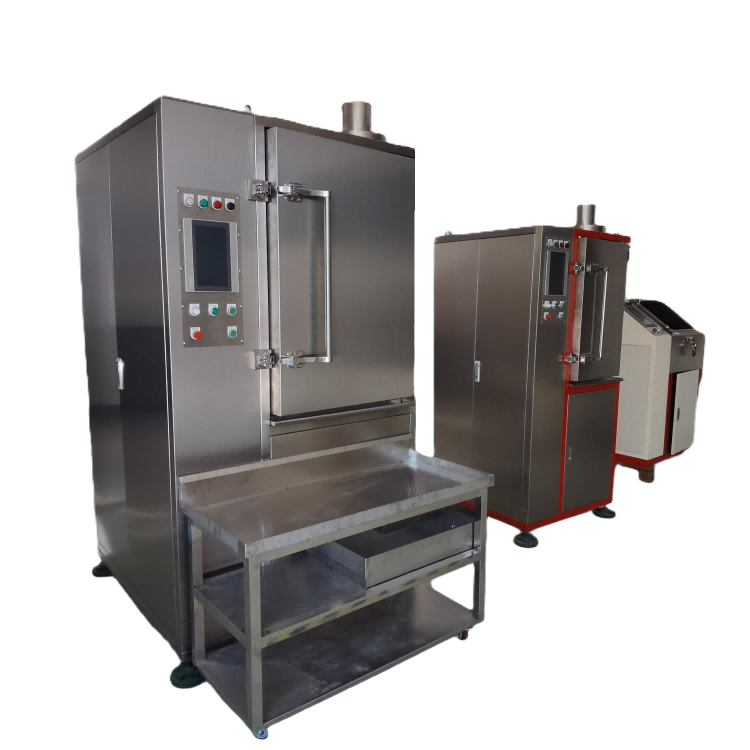
Cryogenic Deflashing Machine Cost: Price Guide 2026 Meta Title: Cryogenic Deflashing Machine Cost: Price Guide 2026 | PEGE Meta Description: A practical 2026 price guide for cryogenic deflashing machines — model pricing, operating costs, ROI, and key factors driving total investment. Summary This 2026 price guide breaks down the key factors affecting cryogenic deflashing machine cost — from barrel capacity and blasting power to long-term operating expenses — helping rubber and plastic manufacturers make informed procurement decisions. Quick Answer Cryogenic deflashing machine cost depends primarily on barrel capacity, blasting power, and automation level. PEGE's Frozen Shot series (PG-40T through PG-150T) offers capacities from 40L to 150L at 40%–80% lower prices than equivalent Western-brand machines. According to PEGE's competitive comparison data, the entry-level PG-40T starts at approximately **US25,000, other models not higher than USD43000**. Key Takeaways • Barrel capacity (40L–150L) is the primary cost driver across PEGE's five standard models. • PEGE machines cost 40%–80% less than comparable UK and USA brand equipment while delivering up to 120% deflashing performance output. • Operating costs matter: PEGE reduces LN₂ consumption by 15%–20% and electricity by 40%–50% versus foreign brands. • A 1-year free warranty plus lifetime after-sales maintenance lowers total cost of ownership. • Typical ROI cycle is 6–12 months, faster than most foreign-brand equipment. Factors Affecting Cryogenic Deflashing Machine Price Barrel Capacity & Model Size The most significant price factor is barrel capacity. PEGE offers five standard models: Model Barrel / Effective Capacity Power Productivity PG-40T 40L / 15L 4kW 150–200 kg/day PG-60T 60L / 20L 6kW 200–250 kg/day PG-80T 80L / 30L 7kW 250–300 kg/day PG-120T 120L / 40L 8kW 400–500 kg/day PG-150T 150L / 50L 9kW 500–600 kg/day Smaller models like the PG-40T suit price-sensitive customers and small-batch production, while the PG-150T handles high-volume operations exceeding 500 kg/day. All models use durable SUS304 stainless steel construction for a 15+ year service life. Blasting Power & Wheel Configuration Motor power ranges from 4kW (250mm wheel for PG-40T/60T) to 9kW (350mm wheel for PG-150T), with projection speeds up to 145.3 m/s. Larger wheel diameters enable faster flash removal but increase machine cost. All models use durable SUS304 stainless steel construction for long-term corrosion resistance. Total Cost of Ownership Beyond purchase price, consider these ongoing expenses: • Liquid nitrogen: PEGE saves 15%–20% LN₂ vs. foreign-brand equivalents thanks to optimized insulation and auto media circulation. • Electricity: PEGE's 4kW–9kW range is 40%–50% lower than competing brands (8kW–15kW). • Polycarbonate media: PEGE media lasts 280–300 cycles at 30% lower procurement cost than imported alternatives. • Maintenance: Compact design and fewer wearing parts cut maintenance costs by 25%–30%. PEGE vs. Foreign-Brand Pricing UK-brand 40L machines start at US50000, while US Brand Starts at 45,000+. PEGE delivers up to 110% deflashing performance output at a fraction of the cost — making it the optimal choice for cost-conscious manufacturers. If you purchase two or more cryogenic deflashing machines, PEGE offers an up to 8% discount on the total price. Real Customer Cases Customer Country Machine Model Output/Day ROI SKELLERUP New Zealand PG-60T 150 kg/day 9 months PAGUM Poland PG-120T 300 kg/day 9 months POLYTEK USA PG-150T 500 kg/day 8 months To understand how cryogenic deflashing works in practice, see our detailed guide: How Does a Cryogenic Deflashing Machine Work? FAQ 1. How much does a cryogenic deflashing machine cost? PEGE's Frozen Shot series ranges from approximately USD25,000-US45,000 for all models (PG-40T–PG-150T). For a detailed quote tailored to your production needs, contact our team. 2. What is the most affordable cryogenic deflashing machine? The PG-40T is PEGE's most affordable model — compact, energy-efficient, and ideal for small-batch production while still delivering up to 95% deflashing performance output. 3. What ongoing costs should I budget for beyond the machine price? Factor in liquid nitrogen supply, polycarbonate media, electricity, and periodic maintenance. PEGE machines are engineered to minimize all four operating cost categories compared to foreign-brand alternatives — 15%–20% less LN₂, 40%–50% less electricity, and 25%–30% lower maintenance. 4. How quickly can I see ROI on a cryogenic deflashing machine? According to PEGE's customer data, the typical ROI cycle is 6–12 months, faster than most foreign-brand equipment. Actual payback period depends on your production volume and local labor costs. One PEGE machine can replace approximately 60–80 manual deflashing workers. 5. Does PEGE offer financing or installment options? PEGE does not provide financing or installment options at this time. Related Products • PG-40T Cryogenic Deflashing Machine — Compact entry-level model for small-batch production • PG-80T Cryogenic Deflashing Machine — Mid-range model for growing production lines • PG-120T Cryogenic Deflashing Machine — High-capacity model for mass production • PG-150T Cryogenic Deflashing Machine — Largest model for maximum daily output Why Choose PEGE Frozen Shot? With nearly 20 years of manufacturing expertise, NANJING PEGE TECHNO MACHINE CO., LTD has exported cryogenic deflashing machines to 15+ countries worldwide, including the USA, Australia, Poland, Russia, and India. The Frozen Shot brand is trusted by global rubber parts manufacturers for: • SUS304 stainless steel construction for long-term durability • 15%–20% lower liquid nitrogen consumption than competitors • 1-year free warranty + lifetime after-sales maintenance • 40%–80% cost savings over equivalent Western-brand machines Ready to get a customized quote for your deflashing needs? Contact PEGE today — our team responds within 24 hours.
Read More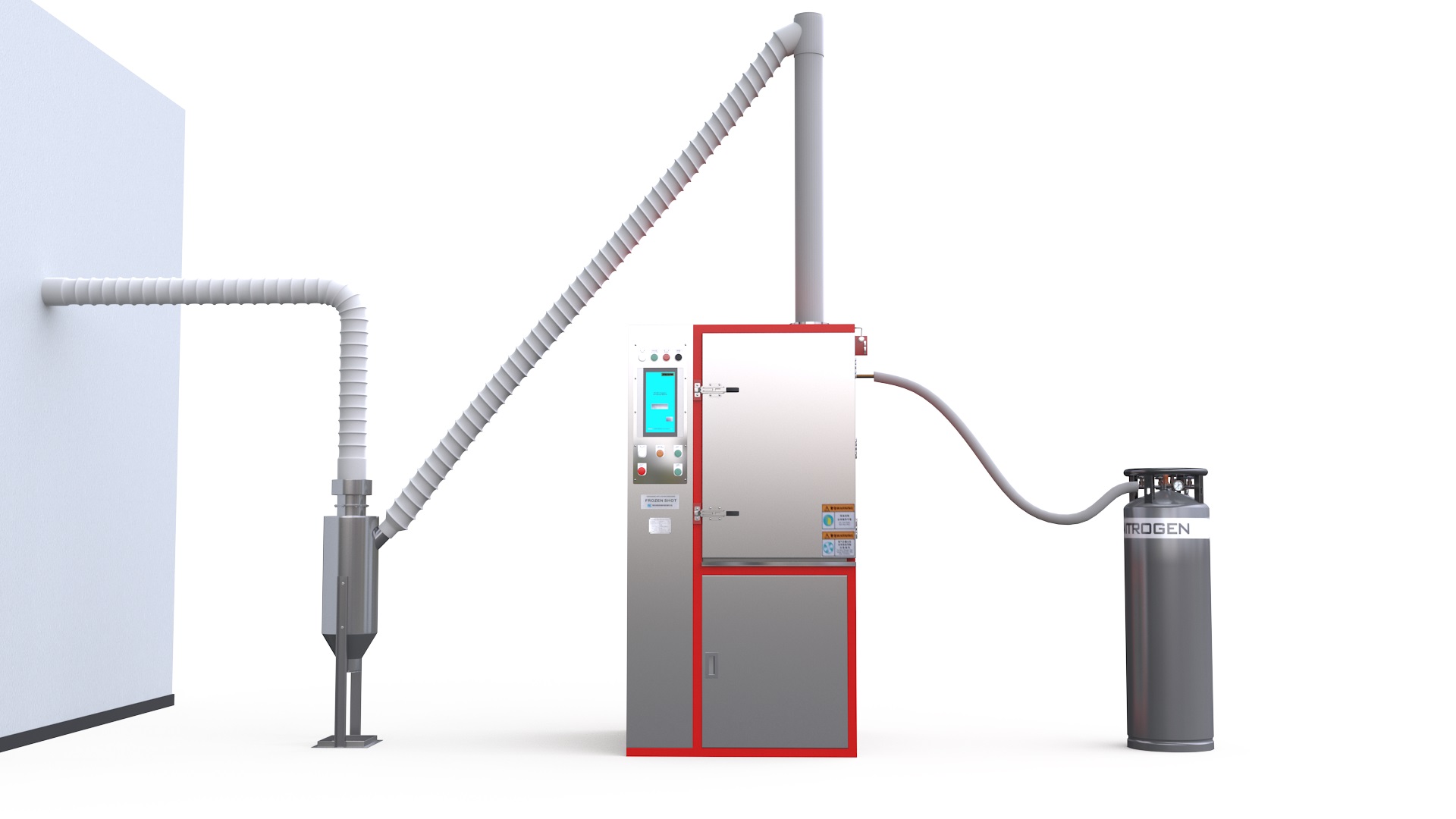
How Does a Cryogenic Deflashing Machine Work? Meta Title: How Does a Cryogenic Deflashing Machine Work? | PEGE Technology Meta Description: Learn how cryogenic deflashing machines use liquid nitrogen to remove flash from rubber and plastic parts in 3 simple steps. Quick guide for engineers and buyers. Quick Answer A cryogenic deflashing machine uses liquid nitrogen to freeze rubber or plastic parts until the thin flash becomes brittle, then blasts them with polycarbonate media to remove the flash — all without damaging the part surface. The process takes 3–10 minutes per batch. • Flash freezes brittle → media blasts it off → part body stays intact The 3-Step Process 1. Freeze. Parts are loaded into a rotating stainless steel drum. Liquid nitrogen is injected to lower the temperature to the material's embrittlement point. Thin flash sections cool faster and become brittle before the thicker part body does. 2. Blast. The drum rotates while polycarbonate media impacts the frozen flash at high speed, cracking it off cleanly. Drum speed and blast duration are adjustable for each material and part geometry. 3. Separate. Broken flash fragments pass through screened perforations in the drum. Finished parts and media are separated, and parts return to ambient temperature — ready for inspection or packaging. For a practical example: when processing NBR O-rings (ID 2mm, OD 20mm) on the PG-80T, we set the parameters as follows — temperature at -75°C, blasting time 5 minutes, media size 1.0mm, blasting speed 6,000 RPM, barrel speed 20 RPM, with approximately 3.5 kg per cycle. This configuration consistently delivers clean flash removal with zero surface damage. Why It Works — Differential Embrittlement The key principle behind cryogenic deflashing is differential embrittlement. Thin flash sections reach embrittlement temperature faster than the thicker part body, creating a temperature gap. Within this window, the media selectively removes brittle flash while the part body remains resilient and unaffected. Unlike grinding or cutting, there is no direct abrasive contact with the part surface itself. What Can Be Processed? Cryogenic deflashing is suitable for rubber (NBR, silicone, EPDM), plastic injection parts (PA, POM), and zinc/magnesium die-cast parts — each requiring different temperature settings. For a detailed material-by-material guide, see our upcoming article: What Materials Can Be Processed by Cryogenic Deflashing? FAQ 1. Does cryogenic deflashing damage the part surface? No. The process targets only the brittle flash; the part body remains elastic at processing temperature and is never abraded. 2. How long does one cycle take? Typically 3–10 minutes per batch, depending on material type and part geometry. 3. How much liquid nitrogen does the machine consume? Consumption varies by model and material. PEGE machines are engineered to achieve 15%–20% lower LN₂ consumption compared to comparable models on the market. Related Products • PG-40T Compact Cryogenic Deflashing Machine — Ideal for small batches and lab testing • PG-80T Cryogenic Deflashing Machine — Medium-volume production workhorse • PG-150T Cryogenic Deflashing Machine — High-volume industrial production PEGE Technology Machine — With nearly 20 years of experience in cryogenic deflashing technology, our SUS304 stainless steel machines are exported to 15+ countries across Europe, Southeast Asia, and South America. Trusted by manufacturers in automotive, medical, electronics, and consumer goods industries. Need a cryogenic deflashing solution for your production line? Contact us today for a free consultation and quote.
Read More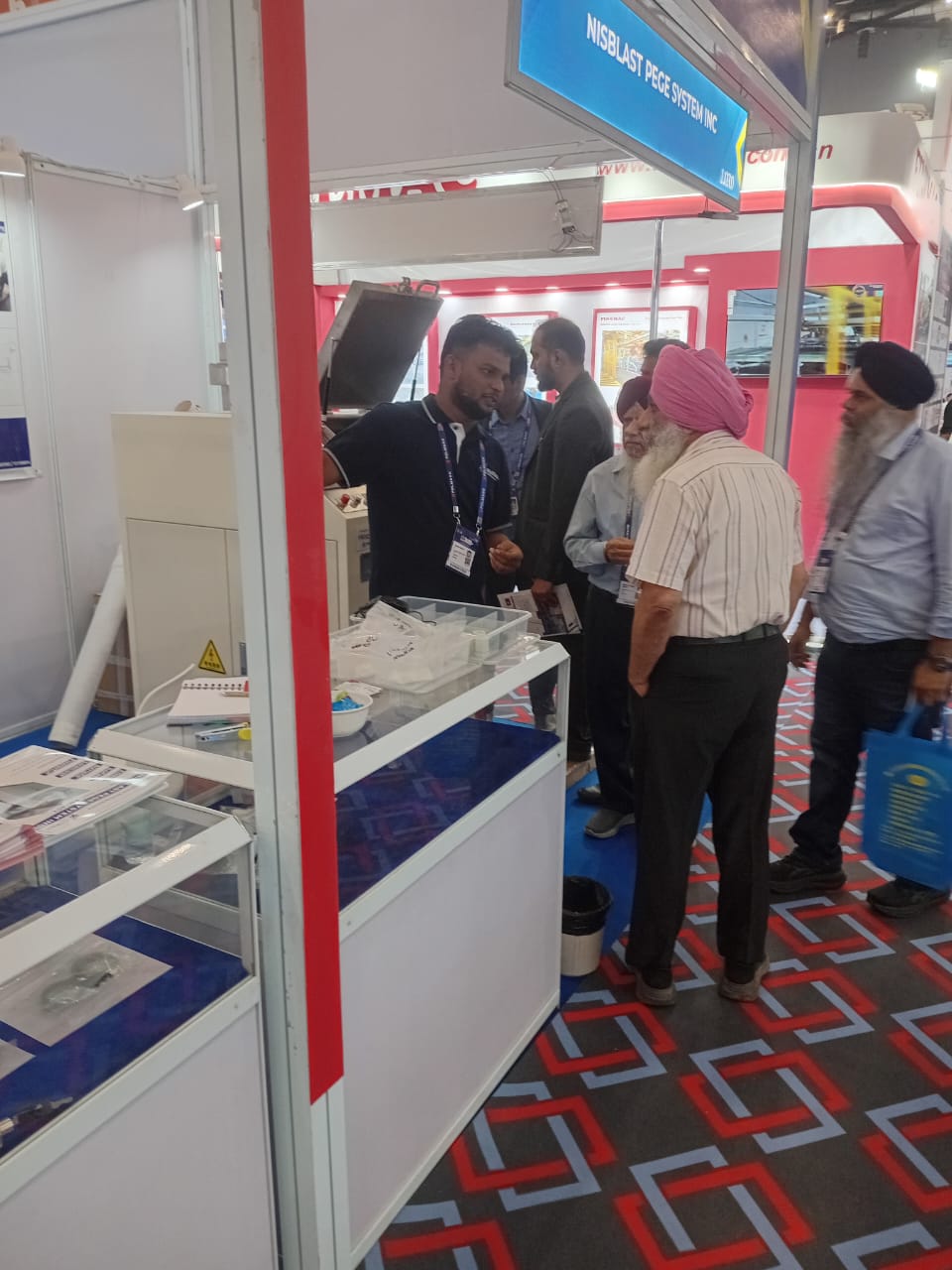
From April 7th to April 10th, IRE 2026-India Rubber Expo 2026 held in New Delhi.Our Indian representative Nisblast PEGE have a demo machine PG-40T for the fair at Booth No. L030.Many customers come to visit and talk with us on this compact and energy saving cryogenic deflashing system.Happy that PEGE PG-40T Cryogenic Deflashing Machine can play its role in supporting the deflashing process for Indian clients.PEGE cryogenic deflashing machine are welcomed by the clients all over the world.
Read More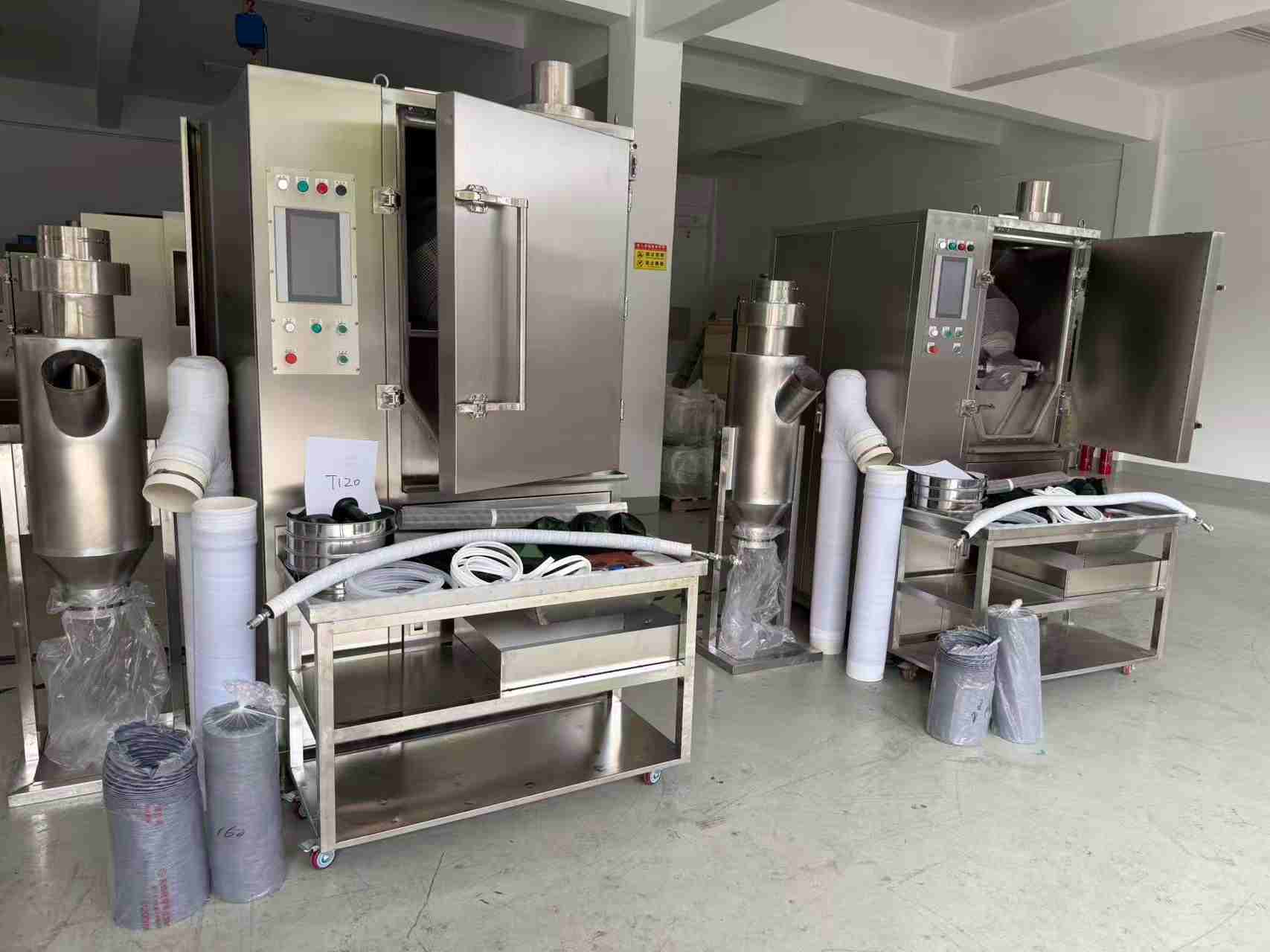
Two great cryogenic deflashing machines PG-80T and PG-120T shipped to Bangkok for client in Thailand for their rubber parts deflashing process. Nanjing PEGE's cryogenic deburring machines with Barcode Scanner to read QR code for quick operation and scientific management. This customer is a well-known reputed multination company who has many branches in southest Asia and China. It is the second time for client to buy our cryogenic deburring machines,Nanjing PEGE can always be your reliable partner.
Read More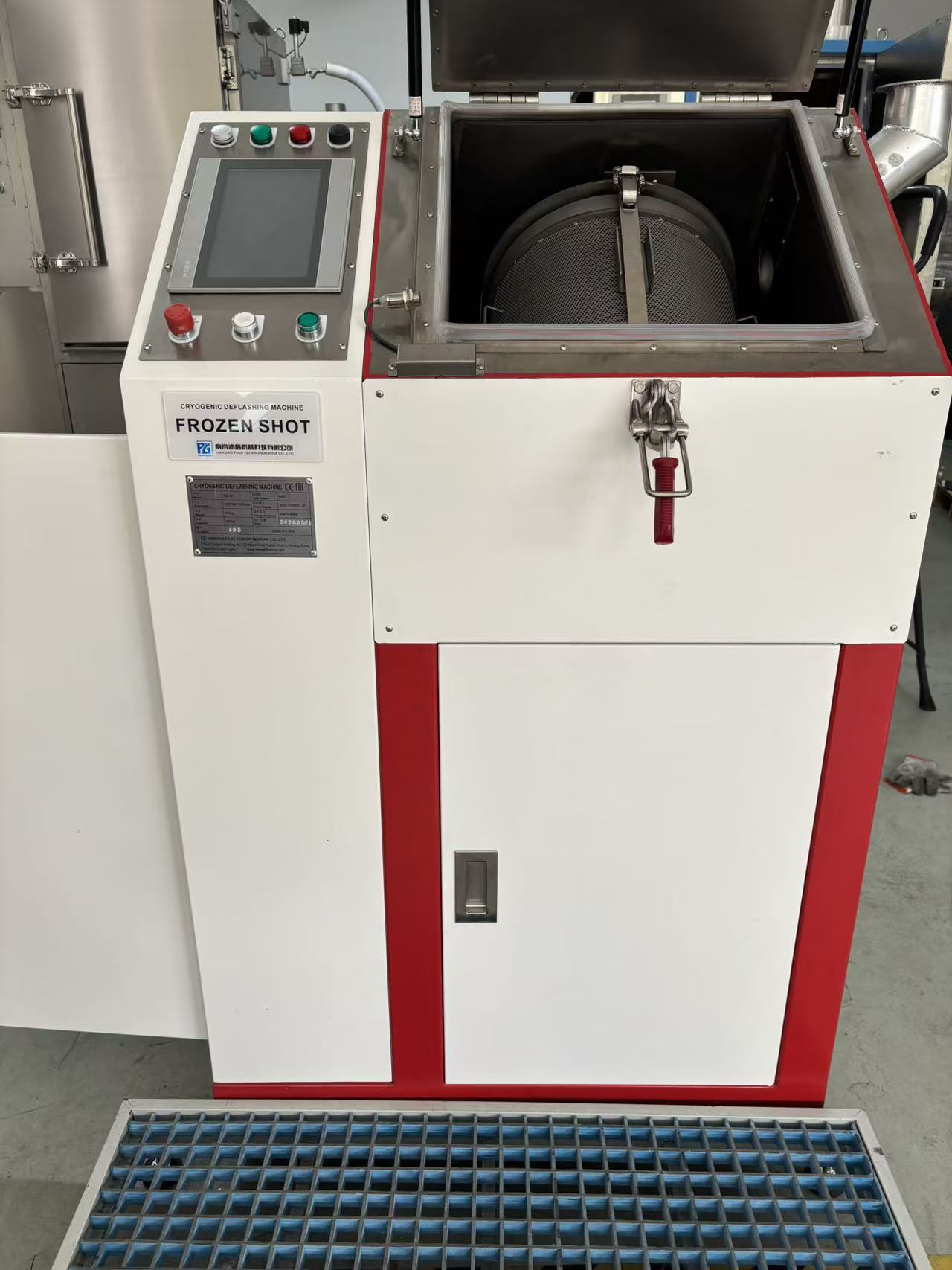
PG-40T is our most compact and smallest capacity cryogenic deflashing machine. After launching to the market, it is warmly welcomed by overseas customers, epecially the customers from India and Russia. Its compact design, lower consumption, powerful blasting system, different parts suitablity let this model nitrogen deflashing machine become a good choice for smaller production volume request. Recently, we get the feedbacks from our client, they say the barrel tumbling area has some shortages. Original Structure, four wheels on the barrel bottom to tumble the barrel Problem 1. The barrel may be wore by blocked wheels. Problem 2. The wheels may be stucked by the media inside. In term of above problems, our technical team starts to develop a new design of the barrel tumbling structure by using different structure to displace the tumbling device. Above design allows a holder for the barrel, the holder is drove by a gear motor with a control shaft. Media will not block its running any more, there will be no wear on the barrel bottom either. The problem is solved totally. Newly improved PG-40T cryogenic deflashing equiment with media blasting has been shipped to India for exhibiition, I belive this new development will increase the barrel lifetime and make the operation run more smoothly. Nanjing Pege Techno Machine Co., Ltd always care about customer's feedback and are happy to improve our cryogenic deflashing machines consistently and scientifically.
Read More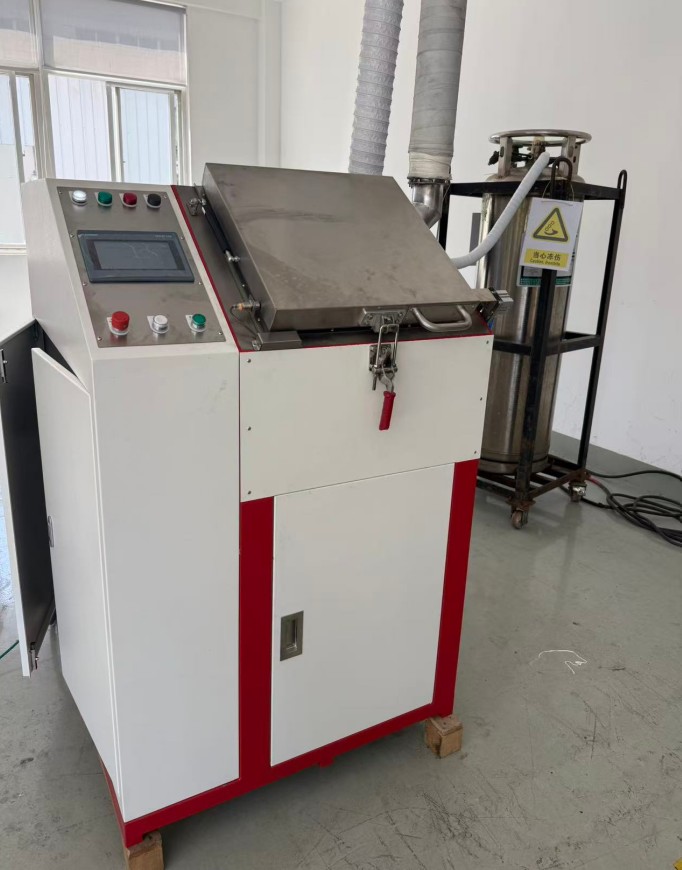
Special Customized Cryogenic Deflashing Machine PG-40T for Russian Customer Shipped on October, 2025 NANJING PEGE is a well-known and reputational cryogenic deflashing machine manufacturer in Nanjing, China. Different models of cryogenic deburring machines are shipped and operated all over the world. On October, we made and shipped a new smaller cryogenic deflasher PG-40T for our customer in Russia to support on deflashing process. This cryogenic deflashing equipment has some special customization points including: We customized two smaller baskets-10liter volume inside of standard baskets of 40liter. HMI, PLC, Inverter are all SIEMENS while the standard controller are Mistubishi. There is a Rego control valve on the inlet of the liquid nitrogen nozzle to control the inlet pressure of LN2 not larger than 10bar. Additional door locker to ensure safety on the machine front cover area. All above adjusments are PEGE'S coordination to meet customer's requirment and improve the machine performance and quality. PEGE ALWAYS KEEPS DELVELOPING GOOD QUALITY MACHINES TO IMPROVE EFFICIENCY AND PRECISION OF CLIENTS.
Read More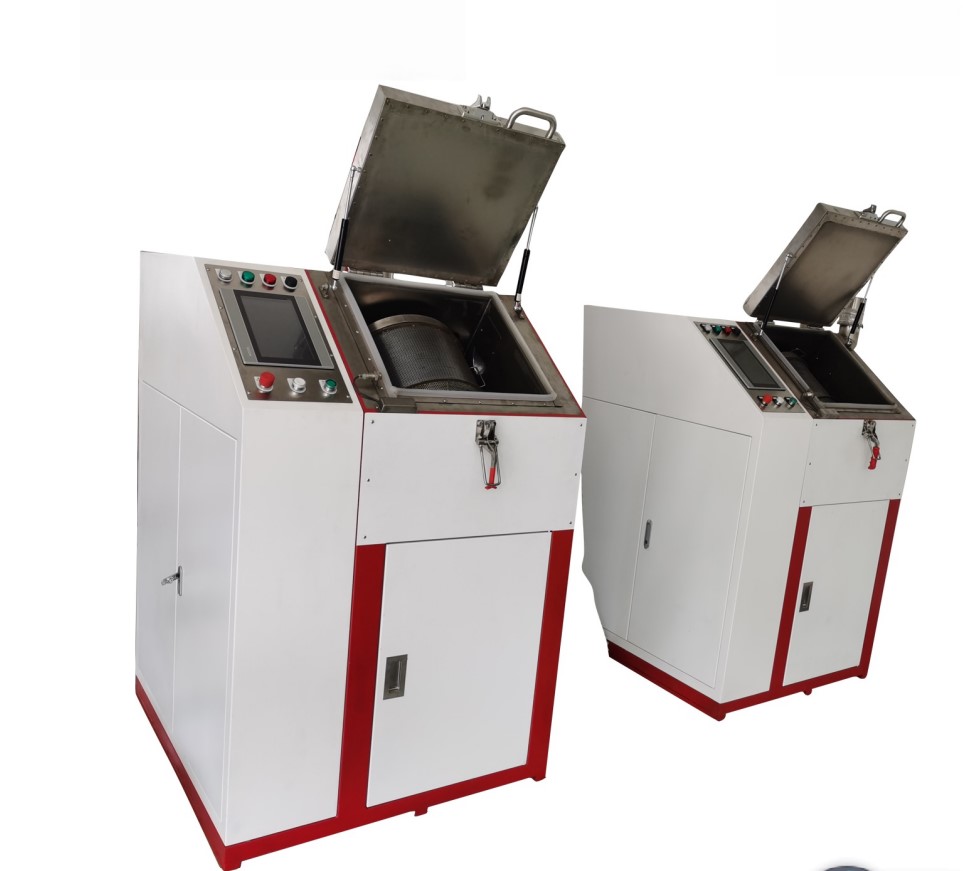
Thanks very much for the trust and recognition from the clients from India. Two set of brand new cryogenic deburring machine for rubber parts deflashing process had been packed well and shipped to Chennai port. PEGE always strive to provide quality and efficient liquid nitrogen cryogenic rubber deflashing machine for customers all over the world.
Read More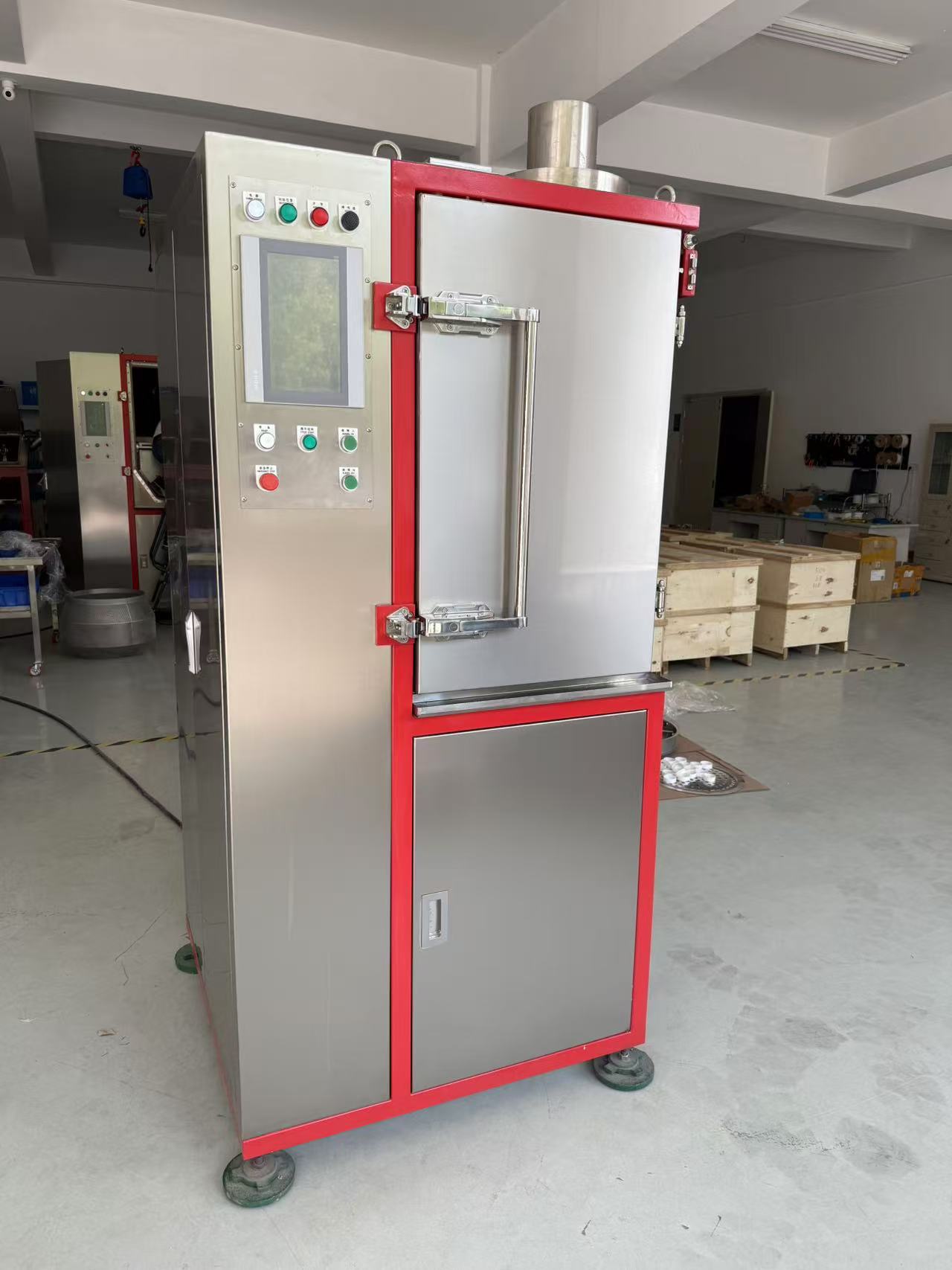
This customer started to contact Nanjing PEGE on the year of 2019, we have been a long time communications on the cryogenic deflashing machine for their rubber products deflashing process. On the year of 2022, customer sent some samples for testing. The rubber parts to be deflashed are rubber O rings. You can see from following photo: There are many flashes which are difficult for manual deflashing. After Cryogenic deflashing, we can get good results without flashes. Even though the deflashing result was acceptable, customer was hesitating to make decision to purchase the cryogenic deburring machine due to the budget problem. They paused the purchase this nitrogen shot blasting deflashing machine. On the year of 2025, last year, customer restarted the project and we talked about the model and the offer and finally we made a deal to sell the cryogenic deflashing equipment Model PG-60T to customer. It is a wonderful machine for automatic rubber deflashing process, it is well designed and well manufacturered. Above is the packed photo for shipment. We believe that our cryogenic deflasher PG-60T will definitely be a good deflashing tool for customer to improve deflashing precision and efficiency.
Read More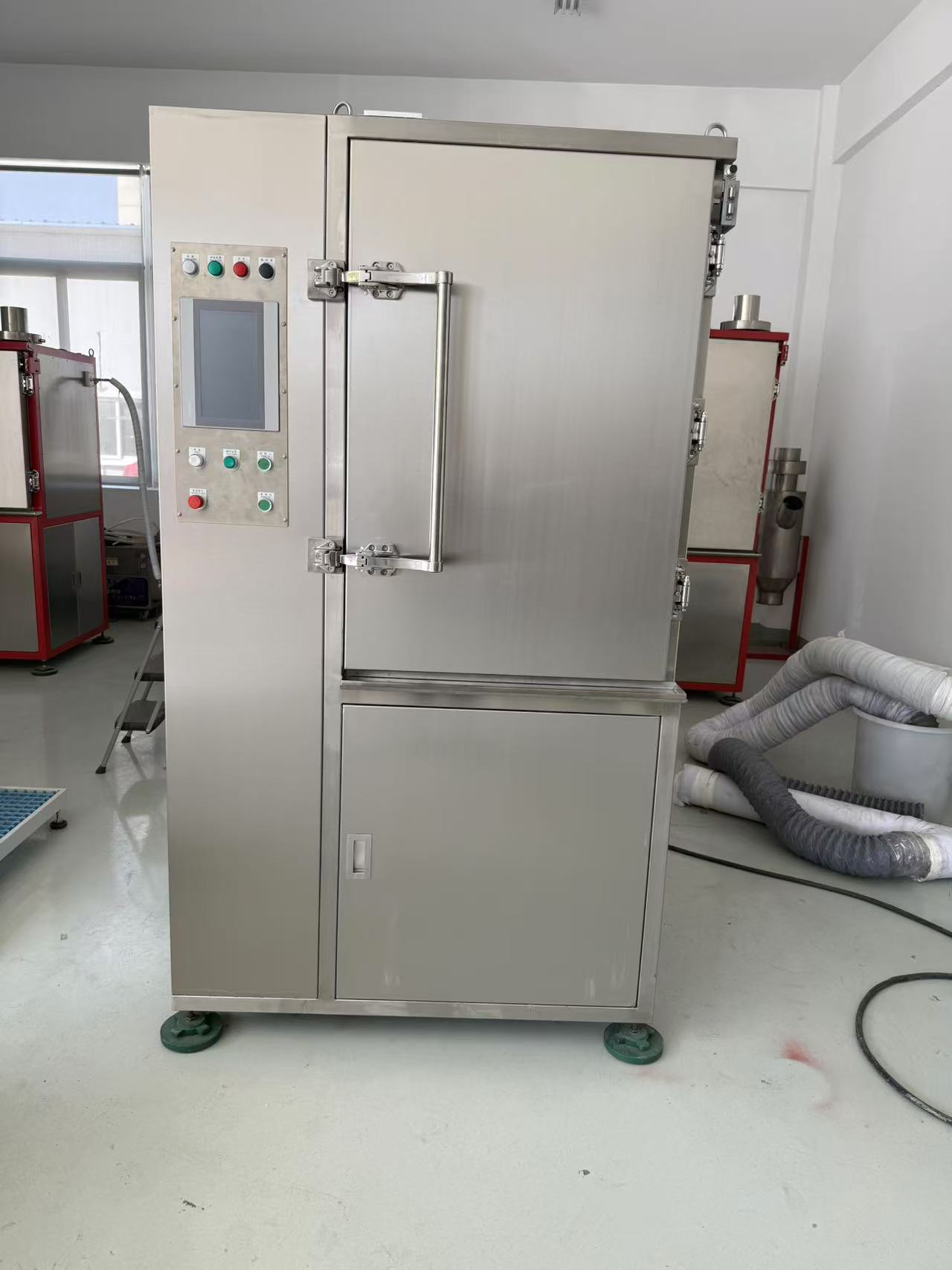
High Quality, Efficient, and Reliable cryogenic deburring/deflashing machine for rubber rings deflashing, which is ordered by an client in South Korea, was shipped on March.Customer visited us at the end of Feburary, he spoken highly of our machine and gave us a rating of 95 points out 100 on this nitrogen deflashing machine, he said it was much better than their old machine from China Taiwan. PEGE's cryogenic deburring machine has its special features: 1. The width of the projectile wheel is increased to 70mm, the range of the projectile wheel is wider, and the projectile efficiency is increased by 20%. 2. Using 10 inch high-end touch screen, which can store more than 20,000 product information, and realise the functions of storing, reading, downloading, editing, host control and upgrading scanner. Improve the tracking and traceability of product handling, and adapt to the intelligent and digital management requirements of modern enterprises. 3. The projectile wheel motor is selected from the reliable brand for long time use in the low temperature environment. 4. The deflector is made of stainless steel, which is free of replacement for life, and our equipment has no impeller rotor, which can reduce the maintenance cost. 5. The sealing plate of the projectile wheel is made of ultra-high polymer UPE, the thickness is increased by 1 times, and the wear-resisting property is increased by 100%. 6. 7.5KW high power motor is used for T120,T150 models, with 600mm width vibrating screen, the processing efficiency and sorting efficiency are obviously improved. 7. Gearbox sealing system has excellent performance, in addition to the labyrinth design, we also add a layer of sealing plate to protect the oil seal. 8. The umbrella gear does not choose straight tooth structure, using helical tooth structure, high degree of overlap, large contact area, wear and tear, increase the service life of the umbrella gear. 9. The door sealing strip is made of imported material and equipped with double heating wire, which has good heating effect and long service life, and there will be no door leakage. 10. Inverted trapezoidal compact design, nozzle built-in, reduce the overall chamber volume, reduce liquid nitrogen consumption. 11. Parts barrel mouth can be closer to the ejection wheel, the injection effect is enhanced, processing efficiency is effectively improved. 12. Separate and independent electrical cabinet and chamber, the electrical cabinet will not be affected by the cold air and dust from the chamber, to improve the cleanliness and use of electrical appliances. and so on. With the above good points on details, Nanjing PEGE's nitrogen deflashing machine is one of the top liquid nitrogen rubber deflashing machines in the world. Thanks very much for his high appraise, and we hope our cryogenic deflasher can realize its value and support well.PEGE always provide high quality and reliable equipments to improve Efficiency and Precision.
Read More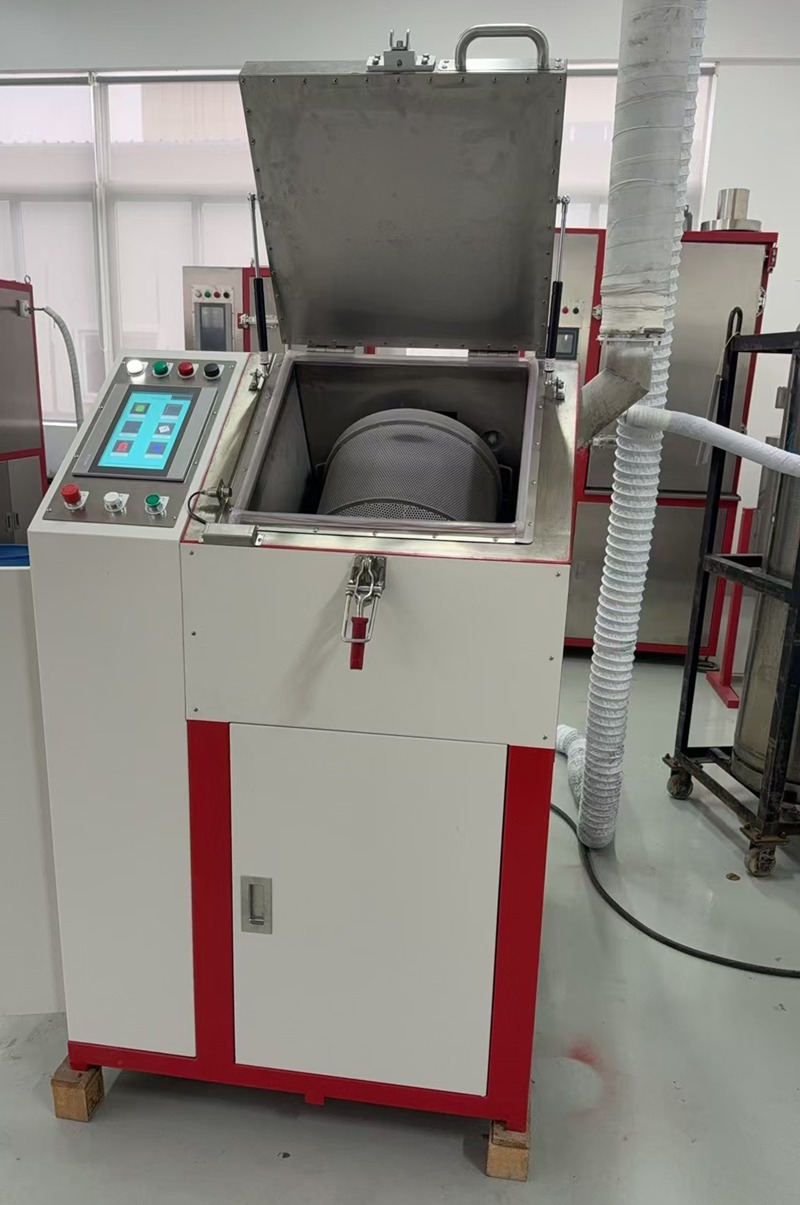
Nanjing PEGE compact cryogenic deflashing machine PG-40T shipped to Mexico for Rubber Deflashing At the begining of Snake year, Nanjing PEGE delivered one compact model cryogenic deflashing machine PG-40T to Mexico to support customer dealing with the rubber metal parts deflashing process. PG-40T cryogenic deburring machine is a good deflashing tool for remove the flashes of rubber metal parts. Following parts can be suficiently removed by cryogenic rubber deflashing machine. With the cryogenic automatic rubber deflashing machine, we belive that the production efficiency and part deflashing precision will be improve greatly. And PEGE will alway be there to support any clients who want to solve the headache flash deflashing problem.
Read More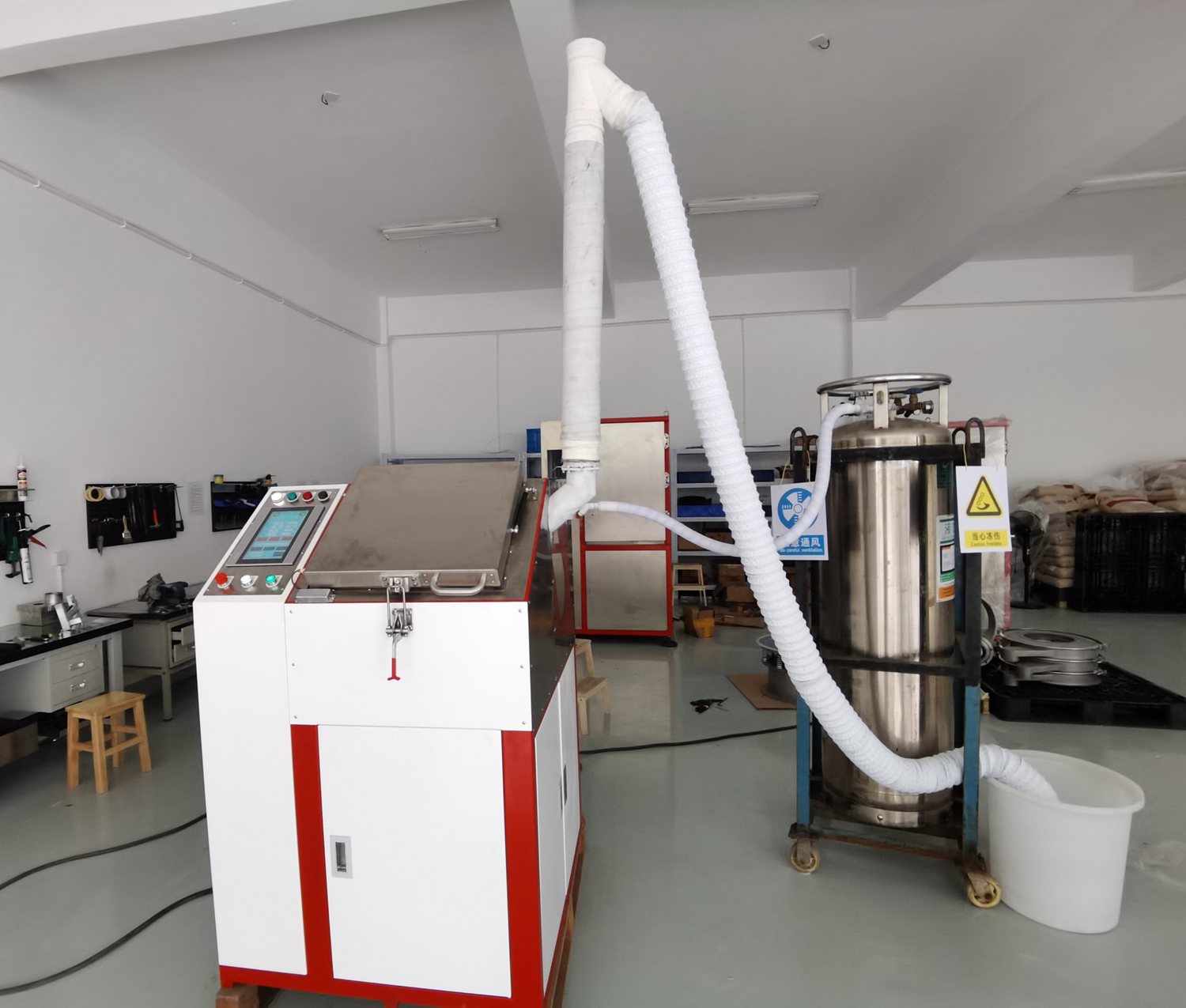
NANJING PEGE TECHNO cryogenic deflashing machine PG-40T deburring PPS+GF40 plastic components Happy New Year of 2025, best wishes to you all! ? NANJING PEGE TECHNO cryogenic deflashing machine PG-40T system keeps providing good efficiency and benifits on customer deburring process,not only for rubber parts, but plasitc parts.PPS+GF40 material is easilly to have burrs during injection molding, cryogenic deburring is a good way for you to solve this headache problem.Check the following photos before deflashing and after cryogenic deburring. After testing and verification, customer has decided to appling the cryogenic deburring system for their plastic parts deburring process.PEGE believes that PG-40T will be helpful for the improvement of production efficiency and quality.
Read MoreWe are online 7*24 hours to answer all your questions


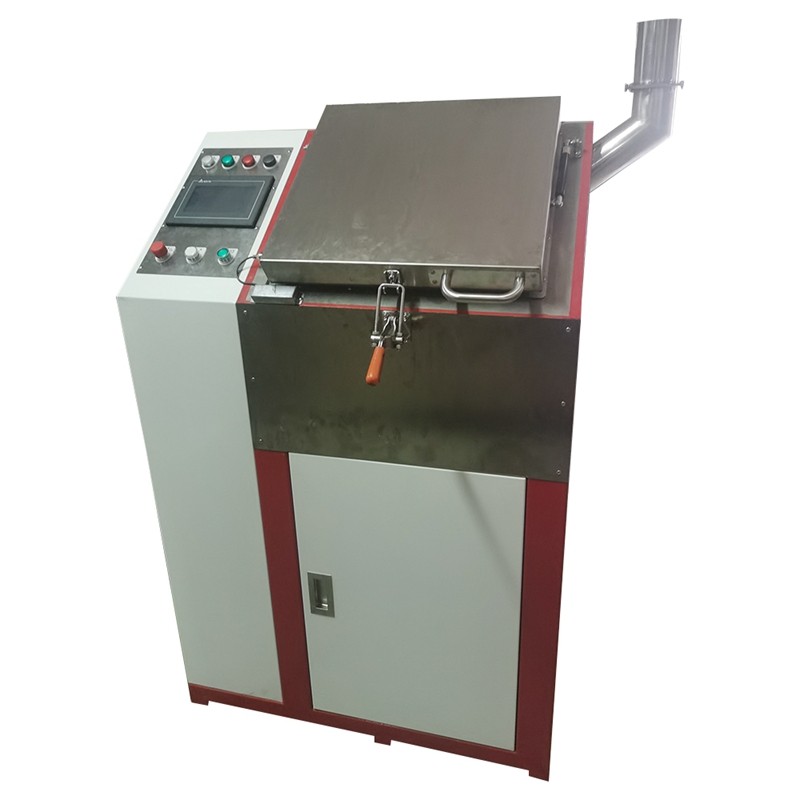 Cryogenic Deflashing Machine PG-40T
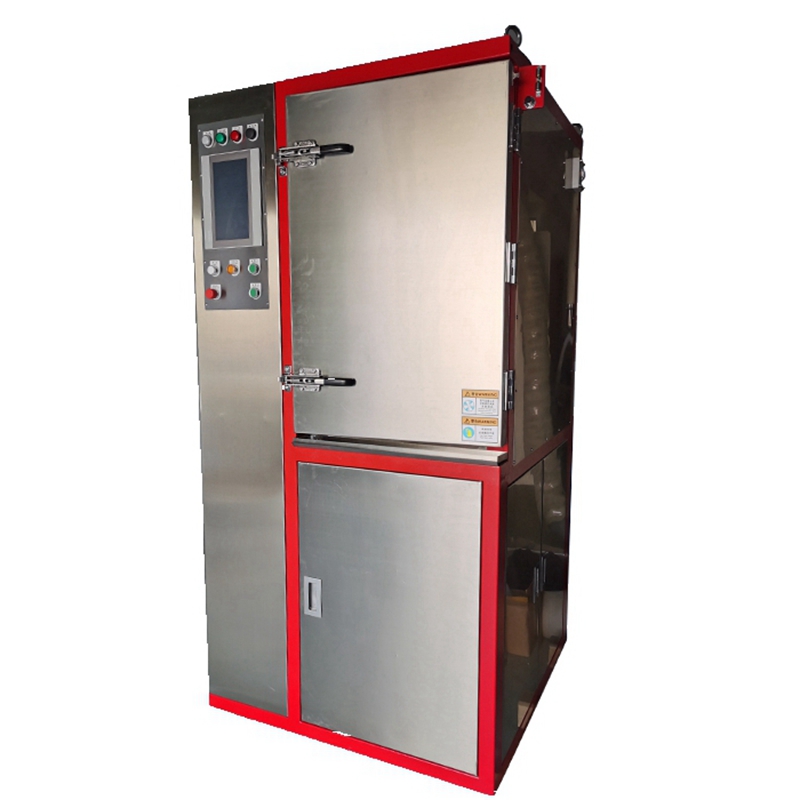 Cryogenic Deflashing Machine PG-60T
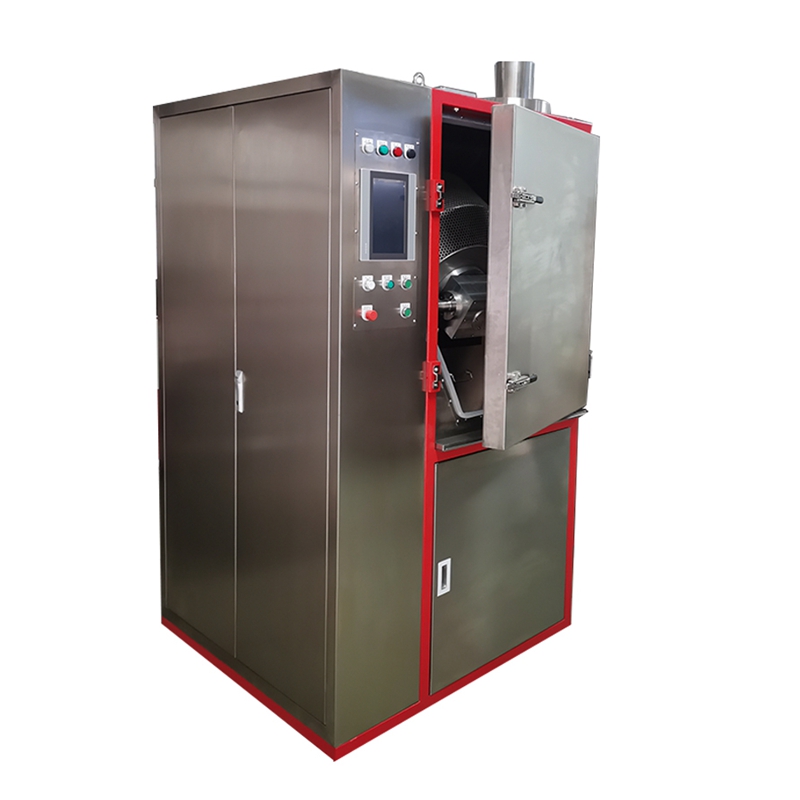 Cryogenic Deflashing Machine PG-80T
 Cryogenic Deflashing Machine PG-120T
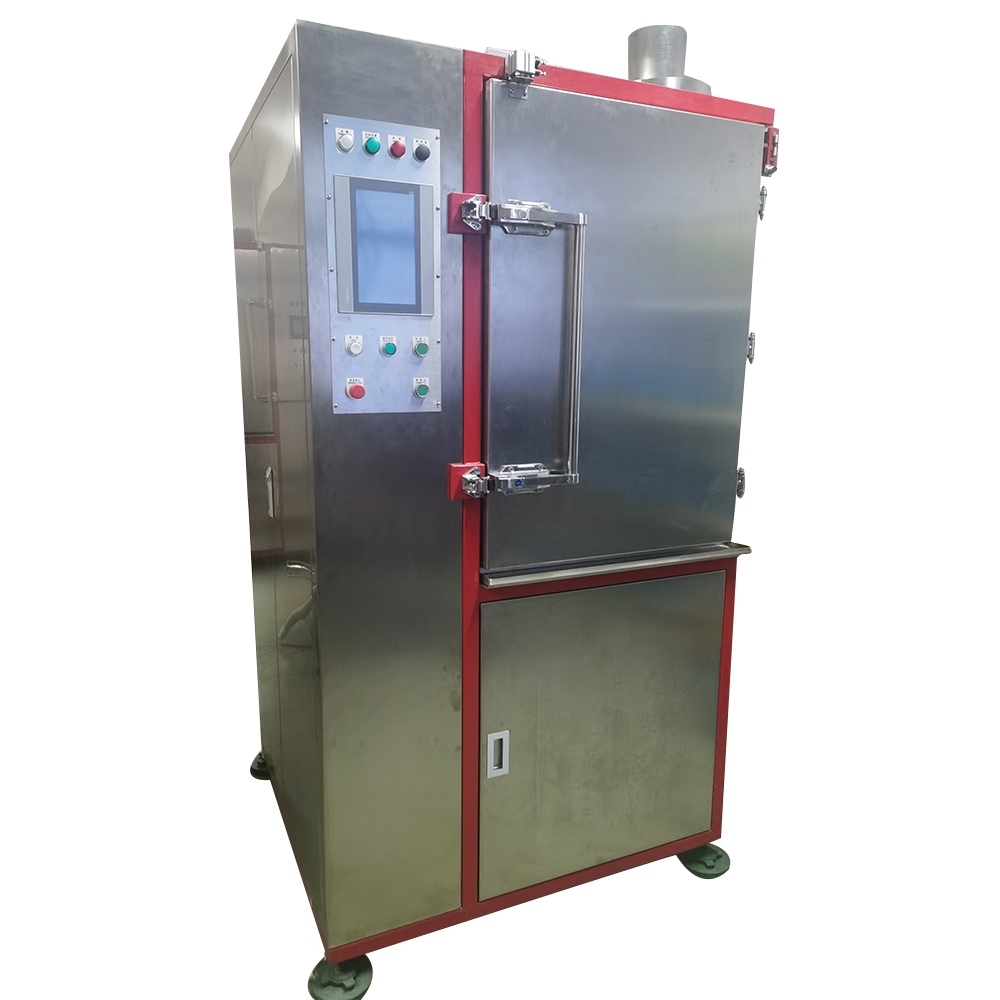 Cryogenic Deburring Machine PG-150T
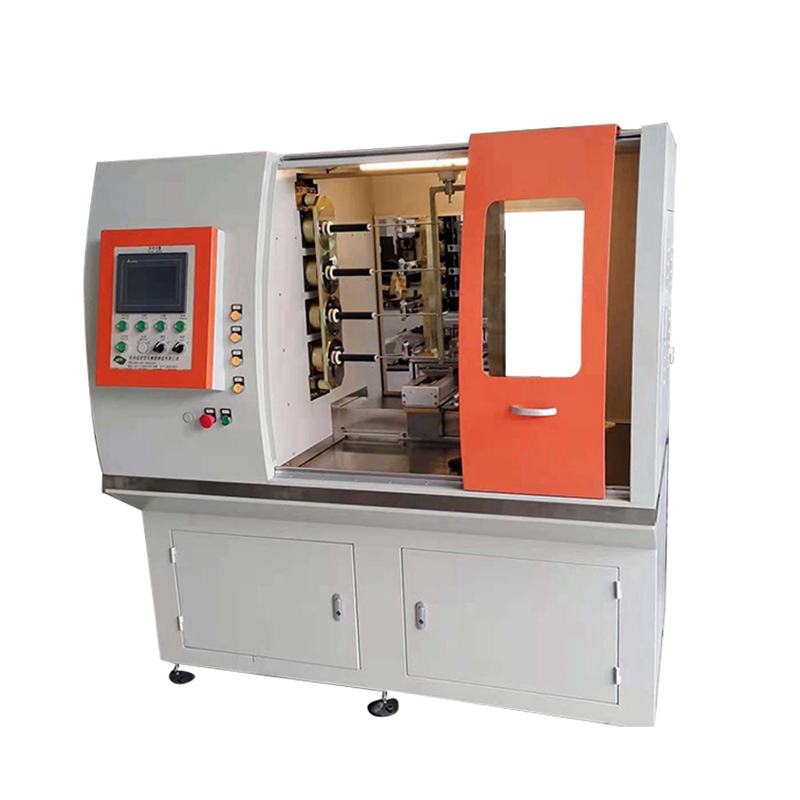 Vacuum Mandrel Washer Gasket Cutting Machine PG-YAQ-1S
 Cryogenic Deburring Machine PG-40T
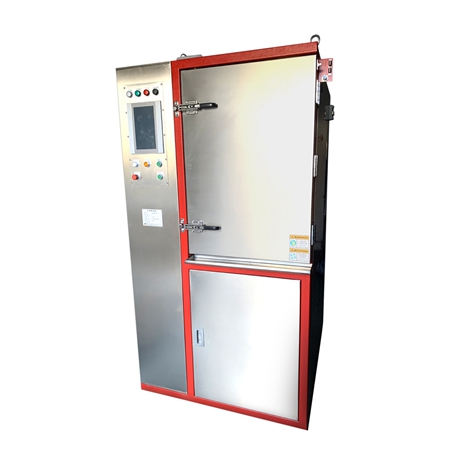 Automatic Cryogenic Rubber Deflashing Machine PG-60T
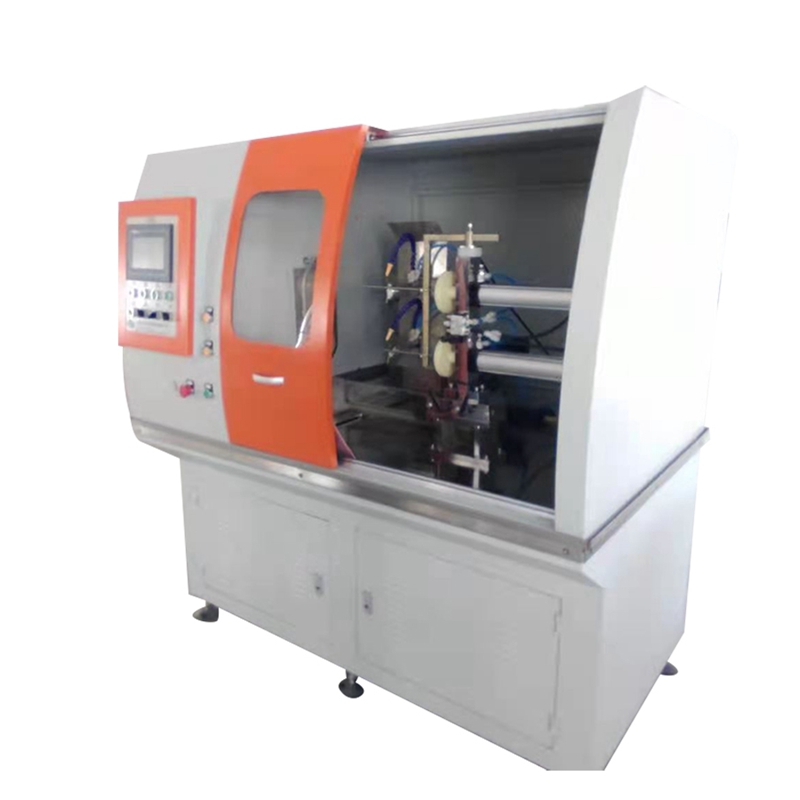 Vacuum Mandrel Cutting Machine PG-YAQ-2S
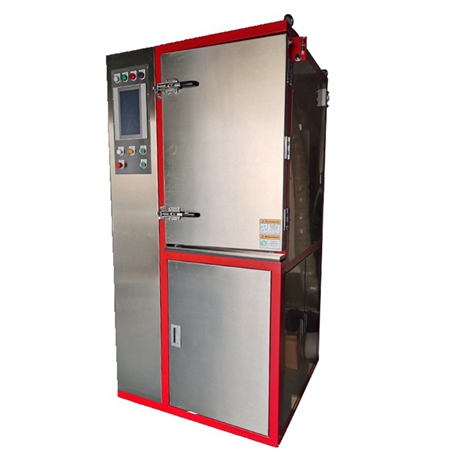 China PEGE Cryogenic Deflasher PG-80T
Vacuum Mandrel Gasket Cutting Machine-4 Shafts PG-YAQ-4S
China PEGE Cryogenic Deflasher PG-80T
Vacuum Mandrel Gasket Cutting Machine-4 Shafts PG-YAQ-4S
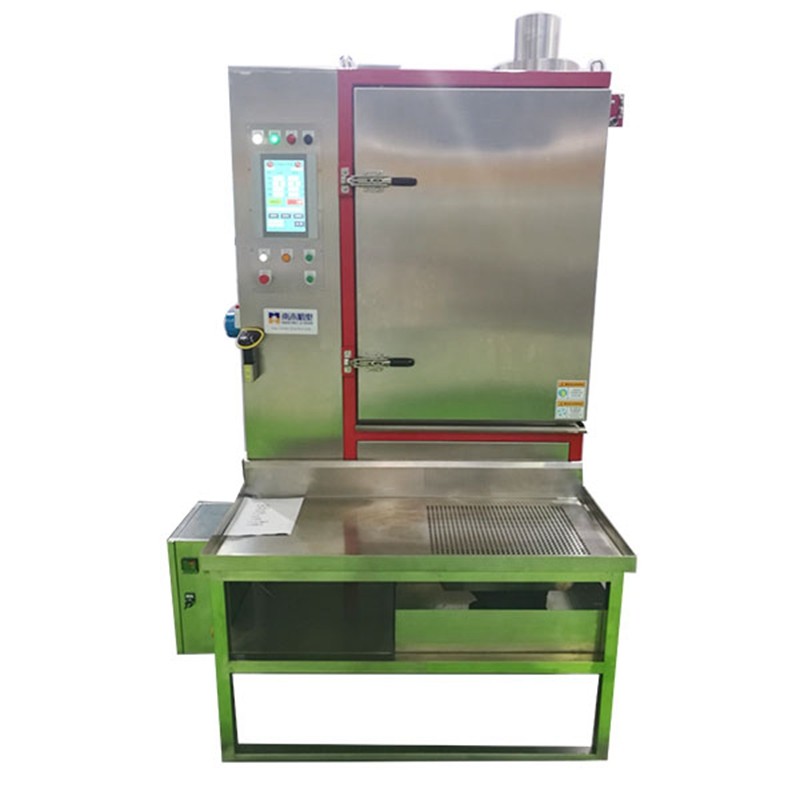 Cryogenic Deflashing Machine Advanced Model PG-AD-120T


 English
 français
 español
 IPv6 network supported